
Product categories
- Apparel
- Cognitive Research Peptides
- Dermal Research Peptides
- Follicular Research Peptides
- Immunomodulatory Research Peptides
- Longevity Research Peptides
- Melanocortin Research Peptides
- Metabolic Research Peptides
- Mitochondrial Research Peptides
- Myogenic Research Peptides
- Neurobehavioral Research Peptides
- Neuroendocrine Research Peptides
- Peptide Research Supplies
- Regenerative Research Peptides
- Shop
- Somatotropic Research Peptides
Filter by price


Myogenic research peptides are synthetic peptide and small-molecule compounds studied in preclinical laboratory research for activity at targets involved in skeletal muscle protein synthesis, satellite cell activation, and muscle hypertrophy signaling. This True Peptide Labs category includes IGF-1 analogs, growth hormone secretagogues (ghrelin receptor agonists), growth hormone-releasing hormone (GHRH) analogs, and GHRP/GHRH combination peptides studied for effects on myoblast proliferation, myofibrillar protein synthesis, and muscle cross-sectional area in rodent and in vitro myogenic model systems.
Every compound ships as lyophilized powder in a sealed sterile vial with a lot-specific certificate of analysis confirming ≥98% purity by HPLC and mass confirmation by MS, tested at ISO-accredited analytical laboratories. All products are sold strictly for research use only (RUO) by qualified researchers, laboratories, and institutions, and are not intended for human or veterinary use, diagnosis, or treatment of any disease per 21 CFR 312.2(b).
Table of Contents
- What Are Myogenic Research Peptides?
- Which Compounds Are Available in the True Peptide Labs Myogenic Category?
- What Are the Categories of Myogenic Research Peptides?
- Which Myogenic Research Peptides Are Most Studied?
- What Is the Importance of Myogenic Research Peptides in Preclinical Science?
- What Muscle Fiber Types Are Studied in Myogenic Peptide Research?
- What Research Protocols Are Described in the Myogenic Peptide Literature?
- Are Myogenic Research Peptides Studied in Combination?
- What Dose Ranges Appear in Published Myogenic Peptide Studies?
- What Endpoints Are Measured in Myogenic Peptide Research?
- What Signaling Pathways Do Myogenic Research Peptides Target?
- What Model Systems Are Used in Myogenic Peptide Research?
- What Adverse Events Have Been Reported in the Myogenic Peptide Research Literature?
- In What Form Do Myogenic Research Peptides Ship?
- How Are Myogenic Research Peptides Tested for Purity?
- How to Purchase Myogenic Research Peptides Online
- What Is the Difference Between Myogenic and Somatotropic Research Peptides?
What Are Myogenic Research Peptides?
Myogenic research peptides are synthetic peptide and small-molecule compounds used in laboratory studies to investigate skeletal muscle biology, including myoblast proliferation, myotube fusion, protein synthesis, satellite cell activation, and hypertrophic signaling in rodent models and in vitro myogenic cell systems. These compounds act at targets including the insulin-like growth factor 1 receptor (IGF-1R), the growth hormone secretagogue receptor (GHSR / ghrelin receptor), and the growth hormone-releasing hormone receptor (GHRH-R). The class is defined by target activity on the somatotropic axis or direct action on muscle cell signaling, per the pharmacological framework used in the IGF-1 and growth hormone secretagogue literature.
Which Compounds Are Available in the True Peptide Labs Myogenic Category?
The compounds available in the True Peptide Labs myogenic research category, organized by mechanism, are listed below. Each compound links to its dedicated product page with certificate of analysis, primary literature references, and lot-specific purity data.
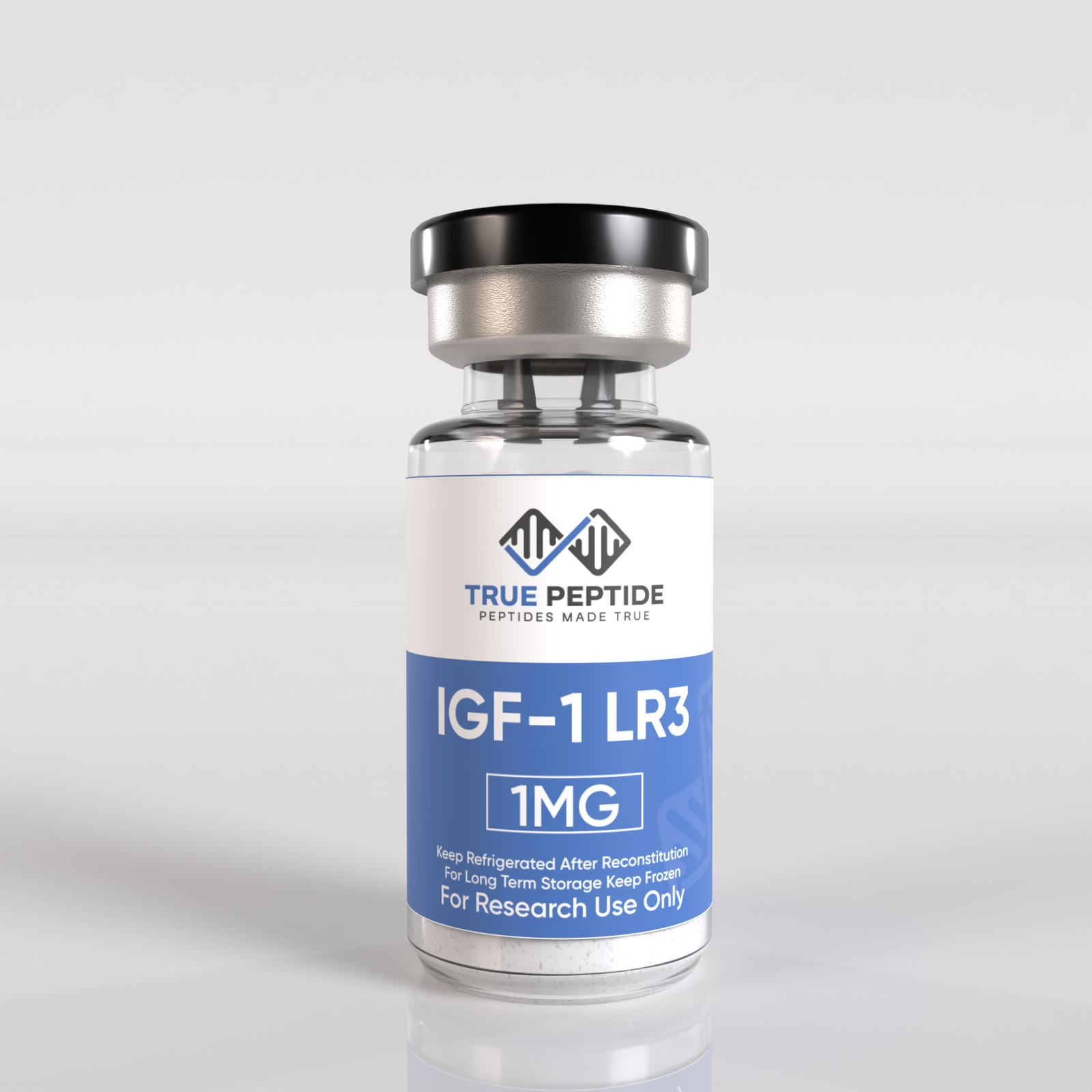
- IGF-1 LR3 (1 mg) — Long-Arg3 insulin-like growth factor 1 analog, engineered for reduced IGFBP-3 binding and extended half-life, characterized by the Adelaide research group in the 1990s
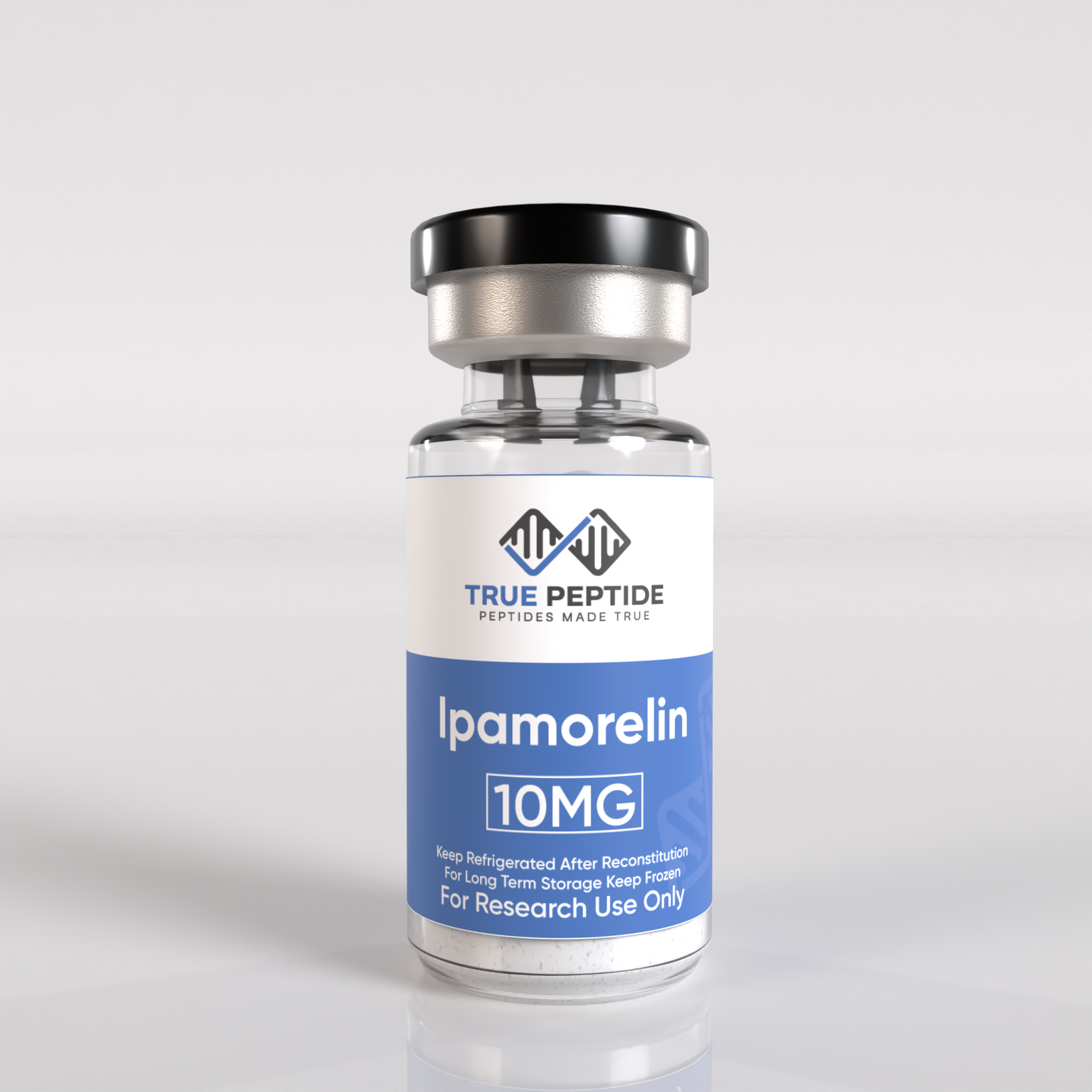
- Ipamorelin (10 mg) — Pentapeptide growth hormone secretagogue and selective ghrelin receptor (GHSR) agonist, characterized in the Novo Nordisk pharmacology program; cross-listed from the somatotropic category
- Ipamorelin + CJC-1295 No DAC (5 mg / 5 mg) — GHRP + GHRH analog peptide blend combining Ipamorelin with the modified GRF(1-29) analog CJC-1295 No DAC; cross-listed from the somatotropic category
- MK-677 Capsule — Ibutamoren, a non-peptide small-molecule ghrelin receptor (GHSR) agonist developed in the Merck secretagogue program, formulated as an oral capsule; cross-listed from the somatotropic category
Each compound ships as lyophilized powder or oral capsule with a lot-specific certificate of analysis. Individual product pages provide the sequence, molecular weight, purity data, and primary literature citations for that specific compound.
What Are the Categories of Myogenic Research Peptides?
The categories of myogenic research peptides, organized by target and mechanism, are as follows:
- IGF-1 analogs — including IGF-1 LR3 (Long-Arg3 IGF-1), engineered with N-terminal extensions and Arg3 substitution to reduce binding to IGFBP-3 and extend half-life relative to native IGF-1.
- Peptide growth hormone secretagogues (GHRP-family) — including Ipamorelin, pentapeptide agonists at the ghrelin receptor (GHSR) selected for GH-selective release with minimal cortisol and prolactin activation.
- Non-peptide ghrelin receptor agonists — including MK-677 (ibutamoren), an orally bioavailable small molecule from the Merck secretagogue development program.
- Growth hormone-releasing hormone (GHRH) analogs — including CJC-1295 No DAC, a modified GRF(1-29) tetrasubstituted analog engineered for enzymatic stability against DPP-IV cleavage.
- GHRP + GHRH combination peptides — including the Ipamorelin + CJC-1295 blend, combining ghrelin receptor and GHRH receptor activation for convergent GH-pulse research.
Which Myogenic Research Peptides Are Most Studied?
The myogenic research peptides with the largest footprint in the peer-reviewed muscle biology literature include native IGF-1 and its analog IGF-1 LR3, which have served as reference compounds for anabolic signaling research for more than three decades. Ipamorelin and MK-677 anchor the growth hormone secretagogue literature, and CJC-1295 No DAC represents the GHRH-analog class in the same programmatic body of work. Individual product pages in this category link to the primary literature for each specific compound and its underlying receptor pharmacology.
What Is the Importance of Myogenic Research Peptides in Preclinical Science?
Myogenic research peptides are important to preclinical science because they are the primary experimental tools for probing anabolic signaling in skeletal muscle, satellite cell biology, and the somatotropic axis in rodent and in vitro models. The IGF-1 signaling axis is the central anabolic pathway in adult muscle and is studied through IGF-1 analogs such as IGF-1 LR3 to dissect PI3K/Akt/mTOR downstream signaling. The ghrelin-GHSR system, characterized following the identification of ghrelin as the endogenous GHSR ligand at the Kangawa laboratory, is studied through Ipamorelin and MK-677 as tools for endogenous GH-pulse research. Compounds in this category inform mechanism-of-action understanding for the IGF-1-mTOR axis, the GH-IGF-1 pulsatile release model, and the satellite cell activation framework in the peer-reviewed muscle biology literature.
What Muscle Fiber Types Are Studied in Myogenic Peptide Research?
The muscle fiber types studied in myogenic peptide research are as follows:
- Type I (slow-twitch oxidative) — myosin heavy chain (MHC) I fibers, prominent in postural muscles such as the soleus in rodent studies, studied for endurance and oxidative capacity endpoints.
- Type IIa (fast-twitch oxidative-glycolytic) — MHC IIa fibers, prominent in mixed-fiber muscles such as the plantaris, studied for hypertrophy responses.
- Type IIx (fast-twitch glycolytic) — MHC IIx fibers, prominent in glycolytic muscles such as the extensor digitorum longus (EDL) in rodents, studied for peak-force and cross-sectional area endpoints.
- Type IIb (fast-twitch glycolytic, rodent-specific) — MHC IIb fibers present in rodent muscle but absent in adult human muscle, studied in rodent hypertrophy models.
- Satellite cells (Pax7+ myogenic progenitors) — the resident stem cell population in adult skeletal muscle, studied for activation, proliferation, and differentiation endpoints in response to myogenic peptides.
What Research Protocols Are Described in the Myogenic Peptide Literature?
Published preclinical protocols for myogenic peptides typically describe administration schedules (single-dose acute signaling studies, chronic dosing over 14–42 days for hypertrophy endpoints), routes (subcutaneous and intraperitoneal for peptide compounds, oral gavage for MK-677 in rodent research), and endpoint measurements specific to each compound. Study designs include the rodent synergist ablation model (surgical removal of synergist muscles to induce compensatory hypertrophy in the plantaris), the hindlimb suspension model for disuse atrophy, the aged-mouse sarcopenia model, and in vitro C2C12 myoblast proliferation-differentiation-fusion assays. Endpoint sampling typically includes muscle wet weight, fiber cross-sectional area by histological sectioning, and Western blot for anabolic signaling proteins. Researchers must consult peer-reviewed methodology sections and obtain approval from their institution's IACUC or IRB before designing any in vivo study, per NIH Office of Laboratory Animal Welfare guidance.
Are Myogenic Research Peptides Studied in Combination?
Myogenic research peptides are studied in combination in the published literature, in what pharmacology reviews term convergent-pathway or complementary-endpoint research. GHRP and GHRH analogs are frequently investigated together in the growth hormone secretagogue literature — the Ipamorelin + CJC-1295 blend represents this combination, engaging the ghrelin receptor and the GHRH receptor in parallel to produce a larger and longer GH pulse than either compound alone. IGF-1 analogs have been studied in combination with GH secretagogues to dissect the relative contribution of pituitary-mediated versus direct-receptor signaling. All combination research described in the primary literature is conducted in laboratory settings under approved study protocols reviewed by the researcher's institution.
What Dose Ranges Appear in Published Myogenic Peptide Studies?
Dose ranges in the published myogenic peptide literature vary substantially by compound, model system, route of administration, and endpoint. Reported ranges span, for reference: low-microgram to low-milligram per kilogram subcutaneous for IGF-1 analogs in rodent muscle protein synthesis studies; microgram-per-kilogram subcutaneous for Ipamorelin in GH-release characterization; low-milligram-per-kilogram oral for MK-677 in rodent secretagogue research; and microgram-per-kilogram subcutaneous for CJC-1295 No DAC in GHRH-receptor pharmacology. Model systems include murine (C57BL/6J, aged cohorts for sarcopenia studies), rat (Sprague-Dawley for synergist ablation), and in vitro (C2C12 mouse myoblast line, primary human myoblast cultures, L6 rat myoblasts). Specific compound product pages link to the primary literature where researchers can review the exact dose ranges reported for each study. This information is provided as literature reference only and does not constitute a recommendation for use.
What Endpoints Are Measured in Myogenic Peptide Research?
The endpoints measured in myogenic peptide research are as follows:
- Muscle protein synthesis rate — quantified as fractional synthetic rate (FSR) using stable-isotope tracer methods (deuterated water, ring-¹³C phenylalanine) with subsequent GC-MS analysis.
- Myofibrillar vs. sarcoplasmic protein synthesis — measured separately after protein-fraction isolation from muscle homogenates.
- mTORC1 signaling — assessed by Western blot for phosphorylation of S6K1 (Thr389), 4E-BP1 (Thr37/46), and rpS6 (Ser240/244).
- Muscle fiber cross-sectional area (CSA) — quantified in histological sections stained for laminin or dystrophin, measured by automated image analysis.
- Satellite cell activation — assessed by Pax7 immunostaining and BrdU or EdU incorporation in situ.
- Myogenic regulatory factor expression — quantified by qPCR and Western blot for MyoD, myogenin, Myf5, and MRF4.
- Ubiquitin-proteasome atrophy markers — MuRF1 and atrogin-1 (MAFbx) mRNA and protein expression, measured in atrophy-model contexts.
- Serum growth hormone and IGF-1 — quantified by ELISA following secretagogue administration to characterize the GH pulse.
- Grip strength and treadmill endurance — functional endpoints in rodent hypertrophy and sarcopenia models.
- Muscle wet weight — measured at study terminus for whole-muscle mass endpoints.
What Signaling Pathways Do Myogenic Research Peptides Target?
The signaling pathways targeted by myogenic research peptides in this category are as follows:
- IGF-1 receptor (IGF-1R) / PI3K / Akt / mTORC1 — the central anabolic pathway in adult skeletal muscle, activated directly by IGF-1 LR3 and indirectly by GH secretagogues via hepatic IGF-1 production.
- Growth hormone secretagogue receptor (GHSR) — the ghrelin receptor expressed in the pituitary and hypothalamus, targeted by Ipamorelin and MK-677.
- Growth hormone-releasing hormone receptor (GHRH-R) — the pituitary somatotroph receptor targeted by GHRH analogs including CJC-1295 No DAC.
- MAPK / ERK1/2 — the proliferation-associated branch of IGF-1 receptor signaling, studied for myoblast proliferation endpoints.
- FOXO1 / FOXO3a — transcription factors that drive muscle atrophy gene expression when active; inhibited by Akt-mediated phosphorylation downstream of IGF-1.
- Myostatin / Smad2/3 — the negative regulator of muscle mass, studied in the context of anabolic peptide effects on Smad phosphorylation and target-gene expression.
- Ubiquitin-proteasome system (MuRF1, atrogin-1) — the catabolic pathway suppressed by IGF-1 signaling through Akt-FOXO inhibition.
What Model Systems Are Used in Myogenic Peptide Research?
The model systems used in myogenic peptide research are as follows:
- C2C12 murine myoblasts — the standard in vitro line for myoblast proliferation, differentiation, and fusion research.
- L6 rat myoblasts — a complementary in vitro line used in insulin and IGF-1 signaling studies.
- Primary human myoblast cultures — obtained from surgical or biopsy tissue for translationally relevant research.
- Rodent synergist ablation model — surgical removal of the gastrocnemius and soleus to induce compensatory plantaris hypertrophy, a standard in vivo hypertrophy paradigm.
- Hindlimb suspension (unloading) model — a rodent atrophy model used to test anabolic peptide effects on disuse atrophy.
- Aged mouse sarcopenia models — using cohorts aged 18–24 months for age-related muscle-loss research.
- Dystrophic (mdx) mouse model — used for studying anabolic peptide effects in a muscle-wasting genetic disease model.
- Denervation atrophy model — sciatic or tibial nerve section to induce neurogenic atrophy for peptide reversal studies.
What Adverse Events Have Been Reported in the Myogenic Peptide Research Literature?
The adverse events reported in the published preclinical and clinical trial literature for myogenic research peptides include injection-site observations (erythema, transient inflammation) for parenteral compounds, transient serum glucose and insulin elevations for IGF-1 analogs, and, for growth hormone secretagogues that have advanced to human clinical research, dose-dependent effects on serum GH, IGF-1, cortisol, and appetite documented in the trial safety data. Some studies have found variable event rates that may be partly due to differences in dosing schedule, fed vs. fasted state, and titration across trials. Researchers must review the full published safety data for any specific compound before designing a study.
In What Form Do Myogenic Research Peptides Ship?
Myogenic research peptides from True Peptide Labs ship in the form appropriate to each product — lyophilized (freeze-dried) peptide powder in sealed sterile vials for injectable peptide compounds such as IGF-1 LR3, Ipamorelin, and the Ipamorelin + CJC-1295 blend; and oral capsules for MK-677. All products ship with a lot-specific certificate of analysis (COA) documenting purity by HPLC and mass by MS. Unopened peptide vials are typically stored refrigerated at 2–8°C per the storage instructions on the COA, and reconstituted material is stored per the published stability data for the specific compound. Cold-pack shipping options are available for temperature-sensitive compounds. All orders ship from the True Peptide Labs facility in Palm Beach Gardens, Florida.
How Are Myogenic Research Peptides Tested for Purity?
Myogenic research peptides at True Peptide Labs are tested every lot by third-party ISO-accredited analytical laboratories using high-performance liquid chromatography (HPLC) for purity determination and mass spectrometry (MS) for molecular weight confirmation. Certificates of analysis are lot-specific and are available on each product page or by request. Testing methodology follows the analytical standards described in the United States Pharmacopeia (USP) general chapter <1503> for peptide characterization.
How to Purchase Myogenic Research Peptides Online
Myogenic research peptides can be purchased directly through the True Peptide Labs catalog on this page. Products are sold exclusively for research use by qualified researchers, laboratories, and institutions, and are not available for human use. All orders ship from the Palm Beach Gardens, Florida facility with standard shipping and cold-pack options for temperature-sensitive compounds. By purchasing, buyers affirm the material will not be administered to humans or animals outside of an approved research protocol reviewed by their institution's IACUC or IRB.
What Is the Difference Between Myogenic and Somatotropic Research Peptides?
Myogenic research peptides target skeletal muscle biology directly — myoblasts, satellite cells, myofibers, and muscle-specific signaling pathways such as mTORC1 and myostatin — while somatotropic research peptides target the pituitary-hepatic growth hormone / IGF-1 axis as a systemic anabolic signaling system. The two categories overlap substantially: growth hormone secretagogues such as Ipamorelin and MK-677, and GHRH analogs such as CJC-1295 No DAC, produce their myogenic effects indirectly through pituitary GH release and hepatic IGF-1 production. The dedicated somatotropic research peptides category page covers Ipamorelin, CJC-1295, MK-677, and Tesamorelin under their primary GH-axis pharmacology framework.