

Product categories
- Apparel
- Cognitive Research Peptides
- Dermal Research Peptides
- Follicular Research Peptides
- Immunomodulatory Research Peptides
- Longevity Research Peptides
- Melanocortin Research Peptides
- Metabolic Research Peptides
- Mitochondrial Research Peptides
- Myogenic Research Peptides
- Neurobehavioral Research Peptides
- Neuroendocrine Research Peptides
- Peptide Research Supplies
- Regenerative Research Peptides
- Shop
- Somatotropic Research Peptides
Filter by price
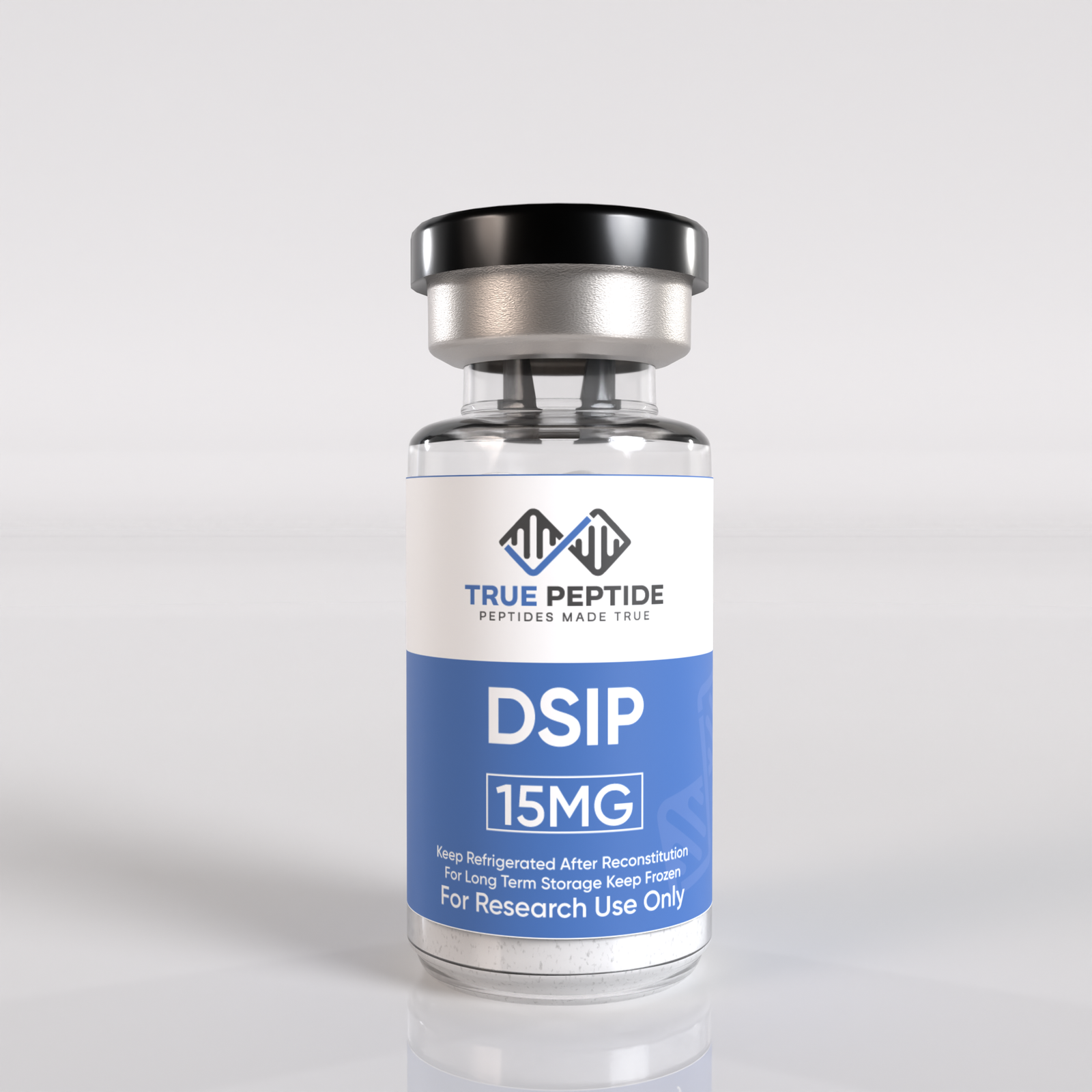
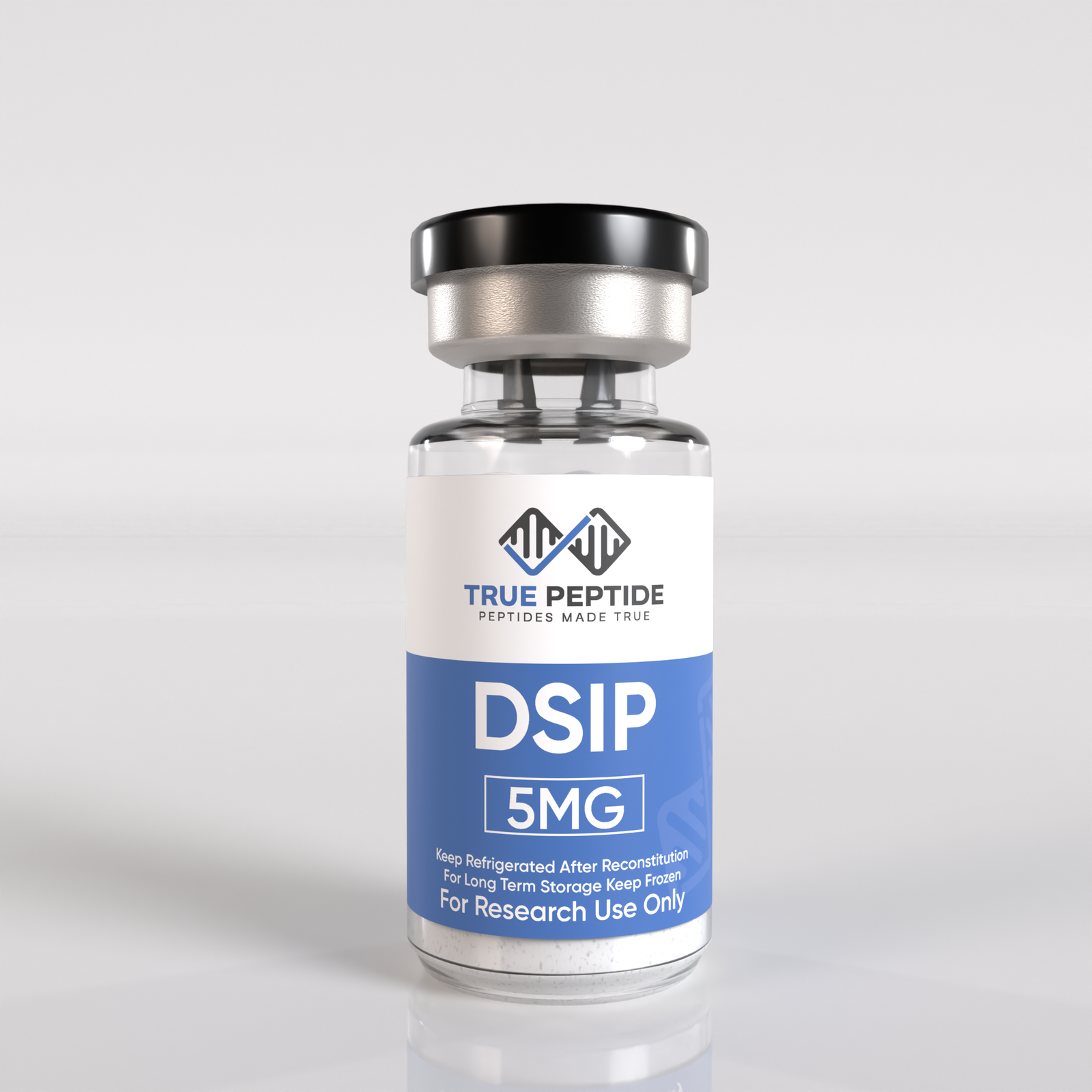


Neuroendocrine research peptides are synthetic peptide compounds studied in preclinical laboratory research for activity at hypothalamic and pituitary targets that regulate sleep architecture, circadian rhythms, reproductive-axis signaling, and stress-response systems. This True Peptide Labs category includes delta sleep-inducing peptide (DSIP), kisspeptin isoforms acting at the KISS1R receptor, and the posterior pituitary neuropeptide oxytocin, studied for effects on slow-wave sleep quantification, hypothalamic-pituitary-gonadal (HPG) axis activation, cortisol diurnal profiles, and social-behavior endpoints in rodent polysomnography, endocrine sampling, and behavioral model systems.
Every compound ships as lyophilized powder in a sealed sterile vial with a lot-specific certificate of analysis confirming ≥98% purity by HPLC and mass confirmation by MS, tested at ISO-accredited analytical laboratories. All products are sold strictly for research use only (RUO) by qualified researchers, laboratories, and institutions, and are not intended for human or veterinary use, diagnosis, or treatment of any disease per 21 CFR 312.2(b).
Table of Contents
- What Are Neuroendocrine Research Peptides?
- Which Compounds Are Available in the True Peptide Labs Neuroendocrine Category?
- What Are the Categories of Neuroendocrine Research Peptides?
- Which Neuroendocrine Research Peptides Are Most Studied?
- What Is the Importance of Neuroendocrine Research Peptides in Preclinical Science?
- What Sleep Architecture Phases Are Studied in Neuroendocrine Peptide Research?
- What Neuroendocrine Axes Do These Peptides Modulate?
- What Research Protocols Are Described in the Neuroendocrine Peptide Literature?
- Are Neuroendocrine Research Peptides Studied in Combination?
- What Dose Ranges Appear in Published Neuroendocrine Peptide Studies?
- What Endpoints Are Measured in Neuroendocrine Peptide Research?
- What Receptors Do Neuroendocrine Research Peptides Target?
- What Model Systems Are Used in Neuroendocrine Peptide Research?
- What Adverse Events Have Been Reported in the Neuroendocrine Peptide Research Literature?
- In What Form Do Neuroendocrine Research Peptides Ship?
- How Are Neuroendocrine Research Peptides Tested for Purity?
- How to Purchase Neuroendocrine Research Peptides Online
- What Is the Difference Between Neuroendocrine and Cognitive Research Peptides?
What Are Neuroendocrine Research Peptides?
Neuroendocrine research peptides are synthetic peptide compounds used in laboratory studies to investigate the hypothalamic-pituitary axis, sleep-wake regulation, reproductive endocrinology, and stress-response signaling in rodent electrophysiology recordings, endocrine sampling paradigms, and in vitro hypothalamic neuron cultures. These compounds act at targets including the hypothesized delta sleep-inducing peptide binding sites in the brainstem and forebrain, the kisspeptin receptor (KISS1R / GPR54) on GnRH neurons, and the oxytocin receptor (OXTR) at central and peripheral sites. The class is defined by mechanism of action on hypothalamic-pituitary signaling and downstream neuroendocrine output, per the pharmacological framework used in the sleep neuropeptide, reproductive axis, and neurohypophyseal peptide literature.
Which Compounds Are Available in the True Peptide Labs Neuroendocrine Category?
The compounds available in the True Peptide Labs neuroendocrine research category, organized by mechanism, are listed below. Each compound links to its dedicated product page with certificate of analysis, primary literature references, and lot-specific purity data.
- DSIP (5 mg) — Delta sleep-inducing peptide, a 9-amino acid neuropeptide (Trp-Ala-Gly-Gly-Asp-Ala-Ser-Gly-Glu) originally identified by the Monnier laboratory at the University of Basel through interhemispheric dialysis during delta-wave sleep in rabbit models, studied for slow-wave sleep and neuroendocrine endpoints
- DSIP (15 mg) — Larger-format vial of the same delta sleep-inducing peptide, for extended-duration research protocols
- Kisspeptin — Neuropeptide encoded by the KISS1 gene, the endogenous ligand for KISS1R (GPR54), characterized in the reproductive endocrinology literature as the master regulator of hypothalamic GnRH release and the hypothalamic-pituitary-gonadal axis
- Oxytocin (5 mg) — 9-amino acid nonapeptide (Cys-Tyr-Ile-Gln-Asn-Cys-Pro-Leu-Gly-NH₂ with a disulfide bond), synthesized in the paraventricular and supraoptic nuclei of the hypothalamus and studied at the oxytocin receptor (OXTR) for effects on social behavior, stress modulation, and parturition-lactation research
Each compound ships as lyophilized powder with a lot-specific certificate of analysis. Individual product pages provide the sequence, molecular weight, purity data, and primary literature citations for that specific compound.
What Are the Categories of Neuroendocrine Research Peptides?
The categories of neuroendocrine research peptides, organized by target and axis, are as follows:
- Sleep-architecture neuropeptides — including delta sleep-inducing peptide (DSIP), studied for effects on slow-wave sleep quantification, delta-power spectral density, and sleep-associated hormone release in rodent electroencephalography (EEG) protocols.
- Kisspeptin family neuropeptides — including full-length kisspeptin-54 and its shorter isoforms (Kp-14, Kp-13, Kp-10), studied at KISS1R on hypothalamic GnRH neurons as the master regulators of the reproductive axis.
- Hypothalamic-posterior-pituitary neuropeptides — including oxytocin, synthesized in magnocellular hypothalamic neurons and released from the posterior pituitary, studied for social behavior, stress response, and reproductive endocrine endpoints.
- Vasoactive neuropeptides with neuroendocrine activity — including vasoactive intestinal peptide (VIP), which acts at VPAC1/VPAC2 receptors in the suprachiasmatic nucleus for circadian regulation research; cross-referenced from the cognitive category.
Which Neuroendocrine Research Peptides Are Most Studied?
The neuroendocrine research peptides with the largest published footprint include oxytocin, with more than 25,000 indexed publications in PubMed spanning parturition, lactation, social behavior, and stress-response research from the Kosfeld and colleagues program at the University of Zurich through modern behavioral neuroscience investigations. Kisspeptin has been the subject of intensive research since its identification as the KISS1R ligand in the early 2000s at Massachusetts General Hospital and the Institut de Génétique et de Biologie Moléculaire et Cellulaire (IGBMC), with more than 3,500 indexed publications on its role as the master reproductive-axis regulator. DSIP, first characterized in the Monnier laboratory in 1977, anchors the sleep neuropeptide literature and remains a research tool for slow-wave sleep and neuroendocrine investigations. Individual product pages in this category link to the primary literature for each specific compound.
What Is the Importance of Neuroendocrine Research Peptides in Preclinical Science?
Neuroendocrine research peptides are important to preclinical science because they are the primary experimental tools for probing sleep architecture, the reproductive endocrine axis, stress-response signaling, and hypothalamic-pituitary integration in rodent electrophysiology, endocrine sampling, and behavioral model systems. DSIP has served as a molecular probe for delta-wave sleep regulation research since its identification in the Monnier laboratory. Kisspeptin has revolutionized reproductive endocrinology research by identifying the upstream regulator of GnRH neurons, with implications for puberty timing, hypogonadotropic hypogonadism research, and reproductive pathophysiology. Oxytocin has been one of the most extensively studied neuropeptides in behavioral neuroendocrinology, with the Kosfeld program at the University of Zurich anchoring the modern social-cognition research literature. Compounds in this category inform mechanism-of-action understanding for the delta-sleep neuromodulation model, the kisspeptin-GnRH-gonadotropin axis, and the oxytocin-social-behavior framework in the peer-reviewed literature.
What Sleep Architecture Phases Are Studied in Neuroendocrine Peptide Research?
The sleep architecture phases studied in neuroendocrine peptide research are as follows:
- Wakefulness — the baseline state characterized on EEG by low-amplitude, high-frequency activity dominated by beta and gamma bands.
- Non-rapid eye movement stage 1 (NREM1) — the transition from wake to sleep, characterized by theta activity and disappearance of alpha rhythms.
- Non-rapid eye movement stage 2 (NREM2) — the intermediate sleep stage characterized by sleep spindles (12–14 Hz) and K-complexes on EEG.
- Slow-wave sleep (NREM3 / delta sleep) — the deepest sleep stage, characterized by high-amplitude delta activity (0.5–4 Hz), and the primary endpoint of DSIP research given the compound's original characterization by delta-wave induction.
- Rapid eye movement (REM) sleep — characterized by low-amplitude high-frequency EEG, muscle atonia, and rapid eye movements, quantified as REM percentage and REM latency.
- Sleep spindles and K-complexes — discrete events within NREM2 studied as memory-consolidation and sleep-quality markers.
- Delta power spectral density — the quantitative measure of slow-wave activity (0.5–4 Hz) integrated across the sleep period, a primary quantitative sleep endpoint.
What Neuroendocrine Axes Do These Peptides Modulate?
The neuroendocrine axes modulated by peptides in this category are as follows:
- Hypothalamic-pituitary-gonadal (HPG) axis — regulated at the top by kisspeptin acting on GnRH neurons; downstream outputs include pituitary LH and FSH release and gonadal sex steroid production.
- Hypothalamic-pituitary-adrenal (HPA) axis — the stress-response system regulated by CRH, ACTH, and cortisol, modulated by oxytocin and by sleep-associated compounds through diurnal cortisol profiles.
- Hypothalamic-pituitary-somatotropic axis — the growth hormone axis, characterized by nocturnal GH pulses that occur predominantly during slow-wave sleep and are studied through sleep-associated GH sampling protocols.
- Neurohypophyseal axis — the posterior pituitary system that releases oxytocin and vasopressin from magnocellular neurons in the hypothalamus.
- Circadian axis — the suprachiasmatic nucleus-driven master clock, studied through diurnal hormone profiles and sleep-wake regulation.
What Research Protocols Are Described in the Neuroendocrine Peptide Literature?
Published preclinical protocols for neuroendocrine peptides typically describe administration schedules (single-dose acute studies during the light or dark phase, chronic dosing over 5–21 days for endocrine adaptation studies, and pulsatile dosing to mimic endogenous release), routes (subcutaneous and intraperitoneal for peptide compounds, intracerebroventricular for central-mechanism studies, and intranasal for translational-relevance research), and endpoint measurements specific to each research question. Study designs include chronic EEG/EMG recording in rodents with automated sleep-stage scoring for DSIP research, serial LH and FSH sampling via jugular catheter for kisspeptin HPG axis characterization, three-chamber social interaction and partner-preference tests for oxytocin behavioral research, and diurnal cortisol sampling for HPA axis modulation research. Researchers must consult peer-reviewed methodology sections and obtain approval from their institution's IACUC or IRB before designing any in vivo study, per NIH Office of Laboratory Animal Welfare guidance.
Are Neuroendocrine Research Peptides Studied in Combination?
Neuroendocrine research peptides are studied in combination in the published literature, in what pharmacology reviews term convergent-axis or complementary-endpoint research. Sleep-associated peptides such as DSIP are frequently investigated alongside growth hormone secretagogues for combined effects on nocturnal GH pulses that occur during slow-wave sleep. Kisspeptin has been studied in combination with GnRH analogs to characterize the pulsatile hierarchy of the reproductive axis. Oxytocin has been combined with vasopressin and its receptor ligands to dissect the shared neurohypophyseal pharmacology of the two structurally related nonapeptides. All combination research described in the primary literature is conducted in laboratory settings under approved study protocols reviewed by the researcher's institution.
What Dose Ranges Appear in Published Neuroendocrine Peptide Studies?
Dose ranges in the published neuroendocrine peptide literature vary substantially by compound, model system, route of administration, and endpoint. Reported ranges span, for reference: low-microgram-per-kilogram subcutaneous and intracerebroventricular for DSIP in rodent EEG sleep-architecture studies; 1–10 nmol/kg subcutaneous or intravenous for kisspeptin-10 in rodent HPG axis studies; 0.1–10 nmol intracerebroventricular for oxytocin in central social-behavior paradigms; and behaviorally-effective intranasal oxytocin doses in the 0.1–1 IU/kg range in the translational social-cognition literature. Model systems include murine (C57BL/6J and knockout variants), rat (Sprague-Dawley and Wistar with jugular catheters for serial sampling), prairie vole (Microtus ochrogaster for pair-bonding paradigms), and in vitro (primary hypothalamic neuron cultures, HEK293 expressing target receptors, and GT1-7 GnRH neuron line). Specific compound product pages link to the primary literature where researchers can review the exact dose ranges reported for each study. This information is provided as literature reference only and does not constitute a recommendation for use.
What Endpoints Are Measured in Neuroendocrine Peptide Research?
The endpoints measured in neuroendocrine peptide research are as follows:
- Sleep-stage percentages and durations — wake, NREM1, NREM2, slow-wave sleep, and REM sleep quantified by automated scoring of EEG/EMG recordings.
- Delta power spectral density — the integrated 0.5–4 Hz EEG power during NREM sleep, the primary quantitative slow-wave endpoint.
- Sleep onset latency and sleep efficiency — time to first sleep episode and total sleep time as a fraction of the recording period.
- Serum luteinizing hormone (LH) and follicle-stimulating hormone (FSH) — measured by ELISA in serial serum samples for kisspeptin HPG axis characterization.
- GnRH neuron activation — assessed by c-Fos immunoreactivity in hypothalamic sections following kisspeptin administration.
- Sex steroid profiles — testosterone, estradiol, and progesterone quantified by mass spectrometry or ELISA.
- Cortisol diurnal profile — serum cortisol quantified across the light-dark cycle to characterize HPA axis rhythmicity.
- Growth hormone pulse patterns — nocturnal GH sampling during slow-wave sleep periods to characterize the sleep-associated GH pulse.
- Central and peripheral oxytocin — measured by ELISA in cerebrospinal fluid and serum following peptide administration.
- Social recognition and interaction — three-chamber social interaction test and partner-preference paradigms in prairie voles for oxytocin research.
- c-Fos immunoreactivity — as a marker of neuronal activation in specific hypothalamic and limbic nuclei.
What Receptors Do Neuroendocrine Research Peptides Target?
The receptors targeted by neuroendocrine research peptides in this category are as follows:
- Kisspeptin receptor (KISS1R / GPR54) — a class A G-protein-coupled receptor (Gq-coupled) expressed on hypothalamic GnRH neurons, targeted by kisspeptin isoforms.
- Oxytocin receptor (OXTR) — a class A G-protein-coupled receptor (Gq-coupled) expressed at central sites including the amygdala, nucleus accumbens, and hypothalamus, and at peripheral sites including uterine myometrium and mammary myoepithelium.
- DSIP binding sites — target identity remains incompletely characterized in the peer-reviewed literature; DSIP is proposed to act at brainstem and forebrain sites regulating sleep-wake transitions, with the specific receptor(s) an active research area.
- Growth hormone secretagogue receptor (GHSR) — the ghrelin receptor, engaged indirectly by sleep-associated ghrelin release during slow-wave sleep.
- Vasopressin V1a and V1b receptors — structurally related to OXTR and often studied alongside oxytocin due to shared neurohypophyseal biology.
What Model Systems Are Used in Neuroendocrine Peptide Research?
The model systems used in neuroendocrine peptide research are as follows:
- Chronic EEG/EMG rodent recording chambers — for automated sleep-stage scoring and delta-power quantification.
- Serial-sampling rat model with jugular catheter — for pulsatile LH and FSH quantification in kisspeptin HPG axis research.
- Gonadectomized rodent models — for characterizing kisspeptin effects on gonadotropin release independent of gonadal feedback.
- Prairie vole (Microtus ochrogaster) — the socially monogamous rodent model for oxytocin pair-bonding research.
- Three-chamber social interaction apparatus — the standard rodent behavioral assay for social approach and social novelty preference.
- GT1-7 GnRH neuron line — the immortalized mouse hypothalamic GnRH neuron line for in vitro kisspeptin signaling research.
- Primary hypothalamic neuron cultures — used for direct electrophysiological and calcium-imaging endpoints.
- HEK293 cells expressing target receptors — for radioligand binding and cAMP/IP3 signaling assays.
What Adverse Events Have Been Reported in the Neuroendocrine Peptide Research Literature?
The adverse events reported in the published preclinical and clinical trial literature for neuroendocrine research peptides include injection-site observations (erythema, transient inflammation) for parenteral administration, and, for compounds with human clinical research such as oxytocin and kisspeptin, dose-dependent effects documented in the trial safety data. Oxytocin has an established human clinical use profile in obstetrics with a well-characterized dose-response record. Kisspeptin has been evaluated in human reproductive endocrinology research with dose-dependent gonadotropin release documented in the trial data. Some studies have found variable event rates that may be partly due to differences in formulation, route, timing relative to the circadian cycle, and titration schedule across trials. Researchers must review the full published safety data for any specific compound before designing a study.
In What Form Do Neuroendocrine Research Peptides Ship?
Neuroendocrine research peptides from True Peptide Labs ship as lyophilized (freeze-dried) peptide powder in sealed sterile vials, packaged with a lot-specific certificate of analysis (COA) documenting purity by HPLC and mass by MS. Unopened vials are typically stored refrigerated at 2–8°C per the storage instructions on the COA, and reconstituted material is stored per the published stability data for the specific compound. Cold-pack shipping options are available for temperature-sensitive compounds. All orders ship from the True Peptide Labs facility in Palm Beach Gardens, Florida.
How Are Neuroendocrine Research Peptides Tested for Purity?
Neuroendocrine research peptides at True Peptide Labs are tested every lot by third-party ISO-accredited analytical laboratories using high-performance liquid chromatography (HPLC) for purity determination and mass spectrometry (MS) for molecular weight confirmation. Certificates of analysis are lot-specific and are available on each product page or by request. Testing methodology follows the analytical standards described in the United States Pharmacopeia (USP) general chapter <1503> for peptide characterization.
How to Purchase Neuroendocrine Research Peptides Online
Neuroendocrine research peptides can be purchased directly through the True Peptide Labs catalog on this page. Products are sold exclusively for research use by qualified researchers, laboratories, and institutions, and are not available for human use. All orders ship from the Palm Beach Gardens, Florida facility with standard shipping and cold-pack options for temperature-sensitive compounds. By purchasing, buyers affirm the material will not be administered to humans or animals outside of an approved research protocol reviewed by their institution's IACUC or IRB.
What Is the Difference Between Neuroendocrine and Cognitive Research Peptides?
Neuroendocrine research peptides target the hypothalamic-pituitary axis and its downstream hormone-signaling systems — including sleep architecture, reproductive endocrinology, and the HPA/HPG axes — while cognitive research peptides target central nervous system pathways involved in attention, memory consolidation, and neuroplasticity, including the BDNF/TrkB axis and GABAergic signaling. The two categories overlap significantly for compounds such as DSIP and oxytocin, which are studied both for hormone-axis and for cognitive-behavioral endpoints. The dedicated cognitive research peptides category page covers Semax, Selank, Pinealon, and VIP under their primary attention-and-memory framework, and the somatotropic research peptides category page covers Ipamorelin, CJC-1295, MK-677, and Tesamorelin under their primary growth-hormone-axis framework.