

Product categories
- Apparel
- Cognitive Research Peptides
- Dermal Research Peptides
- Follicular Research Peptides
- Immunomodulatory Research Peptides
- Longevity Research Peptides
- Melanocortin Research Peptides
- Metabolic Research Peptides
- Mitochondrial Research Peptides
- Myogenic Research Peptides
- Neurobehavioral Research Peptides
- Neuroendocrine Research Peptides
- Peptide Research Supplies
- Regenerative Research Peptides
- Shop
- Somatotropic Research Peptides
Filter by price




Immunomodulatory research peptides are synthetic peptide compounds studied in preclinical laboratory research for activity at immune-system targets including T cell subsets, macrophage polarization states, Toll-like receptors, and the pattern recognition receptor family. This True Peptide Labs category includes thymic peptides, cathelicidin-derived antimicrobial peptides (AMPs), α-MSH-derived anti-inflammatory tripeptides, erythropoietin-derived innate repair receptor agonists, and vasoactive neuropeptides with immune activity, studied for effects on cytokine profiles, T regulatory cell populations, antimicrobial killing endpoints, and inflammatory disease-model activity indices in rodent and in vitro immune model systems.
Every compound ships as lyophilized powder in a sealed sterile vial with a lot-specific certificate of analysis confirming ≥98% purity by HPLC and mass confirmation by MS, tested at ISO-accredited analytical laboratories. All products are sold strictly for research use only (RUO) by qualified researchers, laboratories, and institutions, and are not intended for human or veterinary use, diagnosis, or treatment of any disease per 21 CFR 312.2(b).
Table of Contents
- What Are Immunomodulatory Research Peptides?
- Which Compounds Are Available in the True Peptide Labs Immunomodulatory Category?
- What Are the Categories of Immunomodulatory Research Peptides?
- Which Immunomodulatory Research Peptides Are Most Studied?
- What Is the Importance of Immunomodulatory Research Peptides in Preclinical Science?
- What Immune Cell Populations Are Studied in Immunomodulatory Peptide Research?
- What Research Protocols Are Described in the Immunomodulatory Peptide Literature?
- Are Immunomodulatory Research Peptides Studied in Combination?
- What Dose Ranges Appear in Published Immunomodulatory Peptide Studies?
- What Endpoints Are Measured in Immunomodulatory Peptide Research?
- What Signaling Pathways Do Immunomodulatory Research Peptides Target?
- What Model Systems Are Used in Immunomodulatory Peptide Research?
- How Is Antimicrobial Activity Measured in Immunomodulatory Peptide Research?
- What Adverse Events Have Been Reported in the Immunomodulatory Peptide Research Literature?
- In What Form Do Immunomodulatory Research Peptides Ship?
- How Are Immunomodulatory Research Peptides Tested for Purity?
- How to Purchase Immunomodulatory Research Peptides Online
- What Is the Difference Between Immunomodulatory and Regenerative Research Peptides?
What Are Immunomodulatory Research Peptides?
Immunomodulatory research peptides are synthetic peptide compounds used in laboratory studies to investigate immune system biology, including T cell polarization, macrophage activation states, cytokine signaling, antimicrobial defense, and inflammation resolution in rodent disease models and in vitro immune cell systems. These compounds act at targets including the Toll-like receptor family (particularly TLR2, TLR4, and TLR9), the melanocortin receptor family, the vasoactive intestinal peptide receptors (VPAC1 and VPAC2), the innate repair receptor (a heterocomplex of the erythropoietin receptor with the common beta receptor), and direct microbial membrane targets for antimicrobial peptides. The class is defined by mechanism of action on immune cell populations and inflammatory pathways, per the pharmacological framework used in the thymic peptide, host defense peptide, and neuroimmune literature.
Which Compounds Are Available in the True Peptide Labs Immunomodulatory Category?
The compounds available in the True Peptide Labs immunomodulatory research category, organized by mechanism, are listed below. Each compound links to its dedicated product page with certificate of analysis, primary literature references, and lot-specific purity data.
- Thymosin Alpha-1 (10 mg) — 28-amino-acid thymic peptide (also called Tα1), characterized in the Goldstein research program at George Washington University, studied for Toll-like receptor 9 (TLR9) engagement, T cell maturation, and antiviral immune endpoints
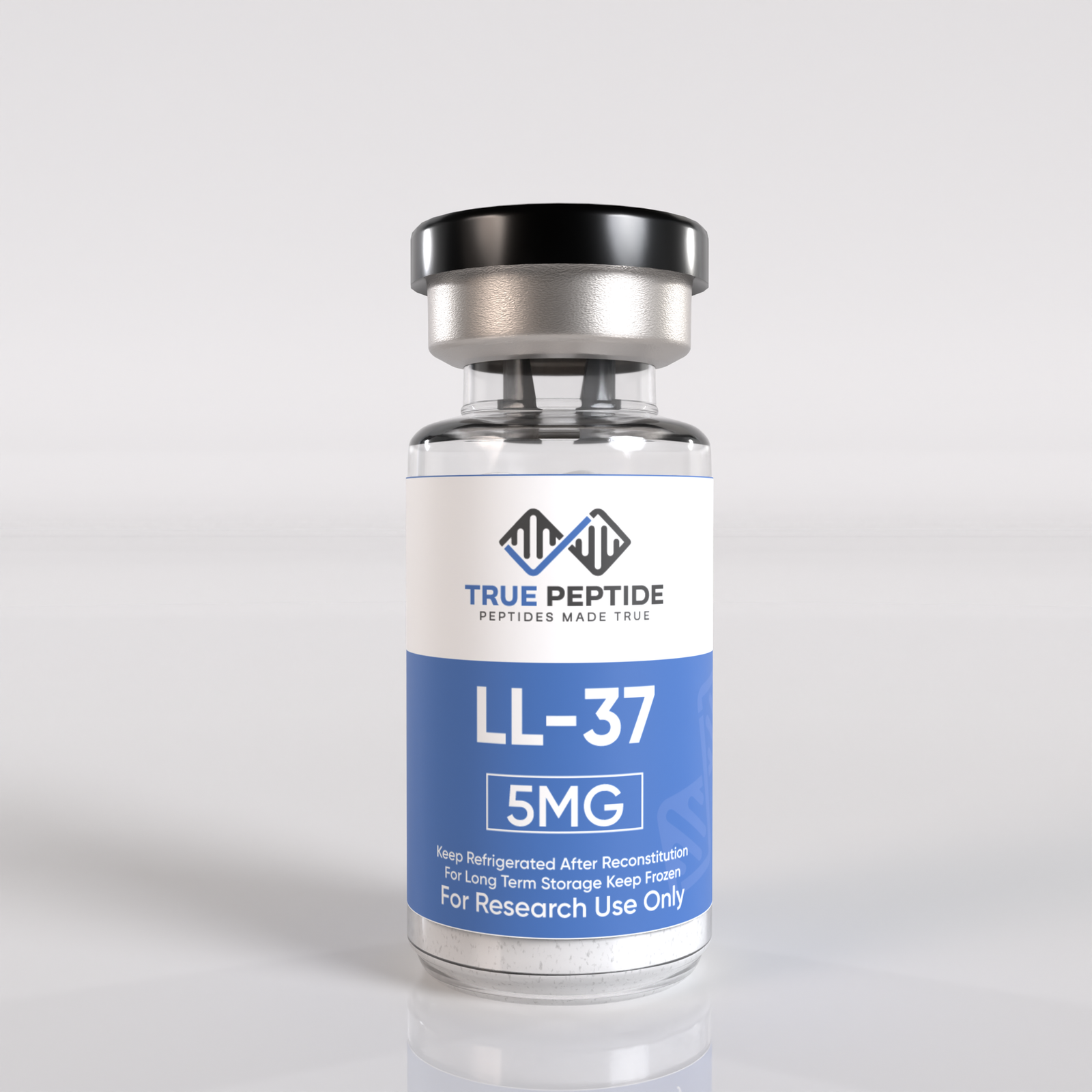
- LL-37 (5 mg) — 37-amino-acid C-terminal cathelicidin fragment (from human hCAP18/CAMP), the sole human cathelicidin-derived antimicrobial peptide, studied for broad-spectrum antimicrobial and host defense endpoints
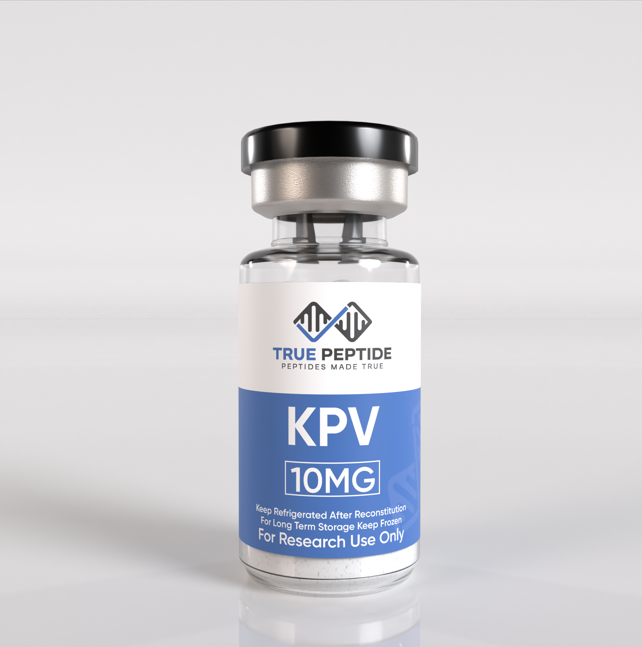
- KPV (10 mg) — Lys-Pro-Val tripeptide, the C-terminal fragment of α-melanocyte-stimulating hormone (α-MSH), studied for anti-inflammatory endpoints in colitis and mucosal-inflammation models; cross-listed from the regenerative category
- ARA-290 (10 mg) — Cibinetide, an 11-amino acid erythropoietin-derived peptide from the Araim Pharmaceuticals development program, studied at the innate repair receptor for anti-inflammatory and neuroprotective endpoints; cross-listed from the regenerative category
- VIP (5 mg) — Vasoactive intestinal peptide, a 28-amino-acid neuropeptide acting at VPAC1 and VPAC2 receptors, studied for anti-inflammatory endpoints on macrophages, dendritic cells, and T cell subsets; cross-listed from the cognitive category
- Hulk Blend (KPV / TB-500 / BPC-157) — Peptide blend combining the α-MSH-derived anti-inflammatory tripeptide with two regenerative peptides; cross-listed from the regenerative category
Each compound ships as lyophilized powder with a lot-specific certificate of analysis. Individual product pages provide the sequence, molecular weight, purity data, and primary literature citations for that specific compound.
What Are the Categories of Immunomodulatory Research Peptides?
The categories of immunomodulatory research peptides, organized by origin and mechanism, are as follows:
- Thymic peptides — including Thymosin Alpha-1, derived from the thymus and studied for effects on T cell maturation, natural killer (NK) cell activity, and Toll-like receptor 9 signaling.
- Cathelicidin-derived antimicrobial peptides — including LL-37, the human cathelicidin C-terminal fragment with broad-spectrum antimicrobial activity against gram-positive and gram-negative bacteria, fungi, and enveloped viruses, plus separate immunomodulatory activity on host cells.
- α-MSH-derived tripeptides — including KPV (Lys-Pro-Val), the C-terminal tripeptide of α-melanocyte-stimulating hormone, studied for anti-inflammatory endpoints in gut and skin mucosal inflammation models.
- Erythropoietin-derived innate repair receptor agonists — including ARA-290 (cibinetide), designed to activate the innate repair receptor (a heterocomplex of the erythropoietin receptor with the common beta receptor) with anti-inflammatory and neuroprotective activity, without stimulating erythropoiesis.
- Vasoactive neuropeptides with immune activity — including VIP, a class II G-protein-coupled receptor ligand engaging VPAC1 and VPAC2 on immune cells to shift cytokine profiles toward anti-inflammatory phenotypes.
- Multi-peptide anti-inflammatory blends — combining anti-inflammatory tripeptides with regenerative peptides for convergent-pathway research.
Which Immunomodulatory Research Peptides Are Most Studied?
The immunomodulatory research peptides with the largest published footprint include Thymosin Alpha-1, characterized across a multi-decade research program originating with the Goldstein laboratory and extended by international investigators for viral infection, sepsis, and immune reconstitution endpoints. LL-37 anchors the human cathelicidin literature and has been characterized in more than 4,000 indexed publications across antimicrobial, wound healing, and immunomodulatory contexts. VIP is one of the most extensively studied neuropeptides in the immune system literature, with more than 15,000 indexed publications spanning neuroimmune interactions and inflammatory disease models. ARA-290 anchors the innate repair receptor literature from the Cerami and Araim Pharmaceuticals research programs. Individual product pages in this category link to the primary literature for each specific compound.
What Is the Importance of Immunomodulatory Research Peptides in Preclinical Science?
Immunomodulatory research peptides are important to preclinical science because they are the primary experimental tools for probing immune cell polarization, cytokine signaling networks, host antimicrobial defense, and inflammation resolution in rodent disease models and in vitro immune systems. Thymosin Alpha-1 has served as a molecular probe for TLR9-driven immune activation and T cell reconstitution research for more than four decades. LL-37 and the broader cathelicidin literature has established the paradigm of dual-function host defense peptides that combine direct antimicrobial activity with modulation of host immune signaling. The α-MSH C-terminal tripeptide series exemplifies the minimal-motif approach to anti-inflammatory peptide design, and ARA-290 has enabled the pharmacological dissection of the innate repair receptor as a distinct target from the classical erythropoiesis-driving EPOR homodimer.
What Immune Cell Populations Are Studied in Immunomodulatory Peptide Research?
The immune cell populations studied in immunomodulatory peptide research are as follows:
- CD4+ helper T cells — including the Th1, Th2, Th17, and follicular helper T (Tfh) subsets, distinguished by their signature cytokine profiles and transcription factors (T-bet, GATA3, RORγt, Bcl6).
- CD4+CD25+Foxp3+ regulatory T cells (Tregs) — the immunosuppressive subset critical to tolerance and inflammation resolution.
- CD8+ cytotoxic T cells — studied for effector function in viral infection and antitumor immune contexts.
- B cells — including naive, memory, and plasma cell subsets studied for antibody production endpoints.
- Natural killer (NK) cells — the innate lymphocytes studied for cytotoxic activity and cytokine production.
- Macrophages — including the M1 (classically activated, pro-inflammatory) and M2 (alternatively activated, anti-inflammatory / tissue-repair) polarization states.
- Dendritic cells — studied for antigen presentation, maturation markers (CD80, CD86, MHC II), and cytokine profiles.
- Neutrophils — studied for chemotaxis, phagocytosis, and neutrophil extracellular trap (NET) formation.
- Innate lymphoid cells (ILCs) — including ILC1, ILC2, and ILC3 subsets studied for tissue-resident innate responses.
What Research Protocols Are Described in the Immunomodulatory Peptide Literature?
Published preclinical protocols for immunomodulatory peptides typically describe administration schedules (single-dose challenge studies, chronic dosing over 7–28 days for disease-model endpoints, and titration studies for TLR-agonist dose optimization), routes (subcutaneous and intraperitoneal for peptide compounds, intravenous for sepsis and rapid-onset infection models), and endpoint measurements specific to each research question. Study designs include LPS endotoxemia and cecal ligation and puncture (CLP) sepsis models, DSS- and TNBS-induced colitis for KPV and ARA-290 anti-inflammatory research, experimental autoimmune encephalomyelitis (EAE) for T cell-mediated autoimmunity, collagen-induced arthritis (CIA) for joint inflammation, and antimicrobial minimum inhibitory concentration (MIC) testing for LL-37 characterization. Researchers must consult peer-reviewed methodology sections and obtain approval from their institution's IACUC or IRB before designing any in vivo study, per NIH Office of Laboratory Animal Welfare guidance.
Are Immunomodulatory Research Peptides Studied in Combination?
Immunomodulatory research peptides are studied in combination in the published literature, in what pharmacology reviews term convergent-pathway or complementary-target research. Thymosin Alpha-1 has been investigated alongside conventional antiviral and antimicrobial compounds in the infectious disease literature, positioned as an immune-priming adjunct rather than a direct antimicrobial. α-MSH-derived tripeptides such as KPV are studied together with regenerative peptides such as BPC-157 and TB-500 in the Hulk Blend formulation for convergent inflammation-resolution and tissue-repair endpoints in gut and skin mucosal models. LL-37 is studied in combination with conventional antibiotics for potential synergy against multi-drug-resistant organisms in the antimicrobial literature. All combination research described in the primary literature is conducted in laboratory settings under approved study protocols reviewed by the researcher's institution.
What Dose Ranges Appear in Published Immunomodulatory Peptide Studies?
Dose ranges in the published immunomodulatory peptide literature vary substantially by compound, model system, route of administration, and endpoint. Reported ranges span, for reference: microgram-per-kilogram subcutaneous for Thymosin Alpha-1 in rodent viral infection and immune reconstitution studies; low-micromolar concentrations for LL-37 in in vitro antimicrobial assays against gram-positive and gram-negative bacteria; microgram-per-kilogram intraperitoneal for KPV in DSS-colitis and mucosal-inflammation models; low-microgram-per-kilogram subcutaneous for ARA-290 in rodent inflammation and neuropathy models; and 5–100 µg/kg subcutaneous for VIP in rodent anti-inflammatory studies. Model systems include murine (C57BL/6J, BALB/c, and immunodeficient strains such as NSG), rat (Sprague-Dawley and Wistar), and in vitro (peripheral blood mononuclear cells (PBMCs), macrophage lines RAW264.7 and THP-1, primary neutrophils, and bacterial strains for antimicrobial testing). Specific compound product pages link to the primary literature where researchers can review the exact dose ranges reported for each study. This information is provided as literature reference only and does not constitute a recommendation for use.
What Endpoints Are Measured in Immunomodulatory Peptide Research?
The endpoints measured in immunomodulatory peptide research are as follows:
- Cytokine profiles — multiplex measurement of IL-1β, IL-2, IL-4, IL-6, IL-10, IL-12, IL-17, IL-23, TNF-α, IFN-γ, and TGF-β in serum, tissue homogenates, and cell supernatants.
- T cell subset flow cytometry — CD4/CD8/CD25/Foxp3/RORγt/T-bet/GATA3 panels for Th1/Th2/Th17/Treg quantification.
- Macrophage polarization — M1 markers (iNOS, CD86) and M2 markers (Arg1, CD206, YM1) by flow cytometry and Western blot.
- Natural killer cell activity — measured by chromium-release or calcein-release assays against target cell lines.
- Antibody production — quantified by ELISA for antigen-specific IgG, IgM, IgA, and IgE isotypes.
- Neutrophil chemotaxis and NET formation — measured in Boyden chamber assays and by immunofluorescence for citrullinated histone H3.
- Disease activity indices — composite scoring in colitis, arthritis, and EAE models.
- Antimicrobial minimum inhibitory concentration (MIC) — quantified by broth microdilution against gram-positive and gram-negative bacterial strains.
- Toll-like receptor signaling — assessed by reporter cell lines (HEK-Blue) and downstream NF-κB nuclear translocation.
What Signaling Pathways Do Immunomodulatory Research Peptides Target?
The signaling pathways targeted by immunomodulatory research peptides in this category are as follows:
- Toll-like receptor 9 (TLR9) — engaged by Thymosin Alpha-1 as an unconventional TLR9 agonist on dendritic cells and macrophages.
- Toll-like receptor 4 (TLR4) — a target of LL-37 modulation in the host defense literature.
- Melanocortin receptors (MC1R, MC5R) — engaged by KPV and related α-MSH C-terminal fragments in anti-inflammatory signaling.
- Innate repair receptor