

Product categories
- Apparel
- Cognitive Research Peptides
- Dermal Research Peptides
- Follicular Research Peptides
- Immunomodulatory Research Peptides
- Longevity Research Peptides
- Melanocortin Research Peptides
- Metabolic Research Peptides
- Mitochondrial Research Peptides
- Myogenic Research Peptides
- Neurobehavioral Research Peptides
- Neuroendocrine Research Peptides
- Peptide Research Supplies
- Regenerative Research Peptides
- Shop
- Somatotropic Research Peptides
Filter by price

5 Amino 1MQ



MOTS-C 10mg


Longevity research peptides are synthetic peptide and small-molecule compounds studied in preclinical laboratory research for activity at targets involved in the hallmarks of aging, including telomere attrition, cellular senescence, mitochondrial dysfunction, epigenetic drift, and deregulated nutrient sensing. This True Peptide Labs category includes telomere-associated tetrapeptides, senolytic peptides, mitochondrial-derived peptides (MDPs), NAD+ pathway compounds, NNMT small-molecule inhibitors, and short peptide bioregulators studied for effects on senescence markers, lifespan and healthspan endpoints, and organ-system aging in aged rodent cohorts and in vitro senescence models.
Every compound ships as lyophilized powder in a sealed sterile vial with a lot-specific certificate of analysis confirming ≥98% purity by HPLC and mass confirmation by MS, tested at ISO-accredited analytical laboratories. All products are sold strictly for research use only (RUO) by qualified researchers, laboratories, and institutions, and are not intended for human or veterinary use, diagnosis, or treatment of any disease per 21 CFR 312.2(b).
Table of Contents
- What Are Longevity Research Peptides?
- Which Compounds Are Available in the True Peptide Labs Longevity Category?
- What Are the Categories of Longevity Research Peptides?
- Which Longevity Research Peptides Are Most Studied?
- What Is the Importance of Longevity Research Peptides in Preclinical Science?
- What Are the Hallmarks of Aging Studied in Longevity Peptide Research?
- What Research Protocols Are Described in the Longevity Peptide Literature?
- Are Longevity Research Peptides Studied in Combination?
- What Dose Ranges Appear in Published Longevity Peptide Studies?
- What Endpoints Are Measured in Longevity Peptide Research?
- What Signaling Pathways Do Longevity Research Peptides Target?
- What Model Systems Are Used in Longevity Peptide Research?
- What Adverse Events Have Been Reported in the Longevity Peptide Research Literature?
- In What Form Do Longevity Research Peptides Ship?
- How Are Longevity Research Peptides Tested for Purity?
- How to Purchase Longevity Research Peptides Online
- What Is the Difference Between Longevity and Mitochondrial Research Peptides?
What Are Longevity Research Peptides?
Longevity research peptides are synthetic peptide and small-molecule compounds used in laboratory studies to investigate the biology of aging in aged rodent cohorts, progeroid mouse models, and in vitro senescence induction systems. These compounds act at targets including the telomerase reverse transcriptase (TERT) transcriptional program, the FOXO4–p53 interaction in senescent cells, the mitochondrial NAD+ salvage pathway, the nicotinamide N-methyltransferase (NNMT) methyl-donor pathway, and mitochondrial-derived peptide signaling. The class is organized by mechanism against the hallmarks of aging framework described in López-Otín and colleagues, which defines the primary molecular categories driving age-related decline.
Which Compounds Are Available in the True Peptide Labs Longevity Category?
The compounds available in the True Peptide Labs longevity research category, organized by mechanism, are listed below. Each compound links to its dedicated product page with certificate of analysis, primary literature references, and lot-specific purity data.
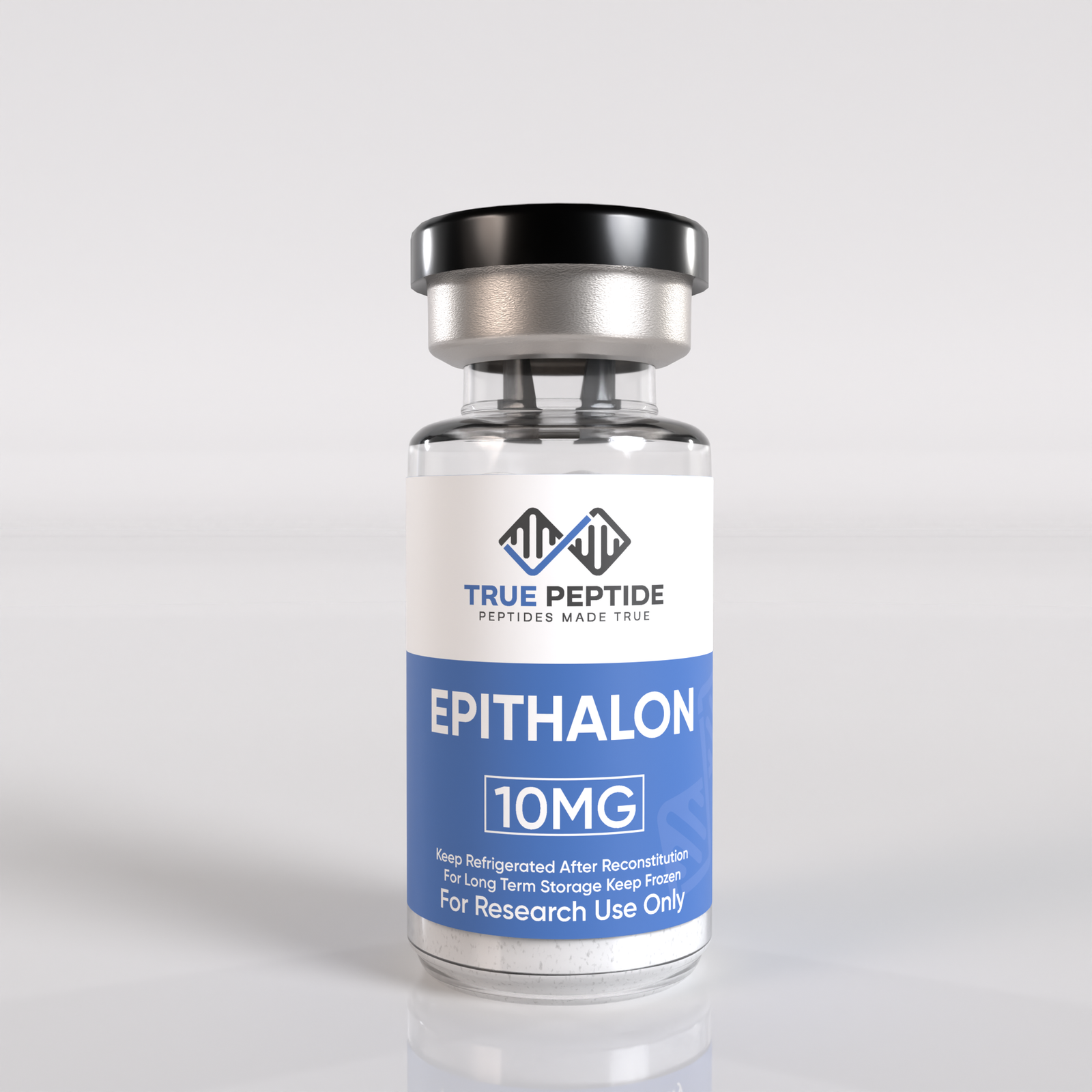
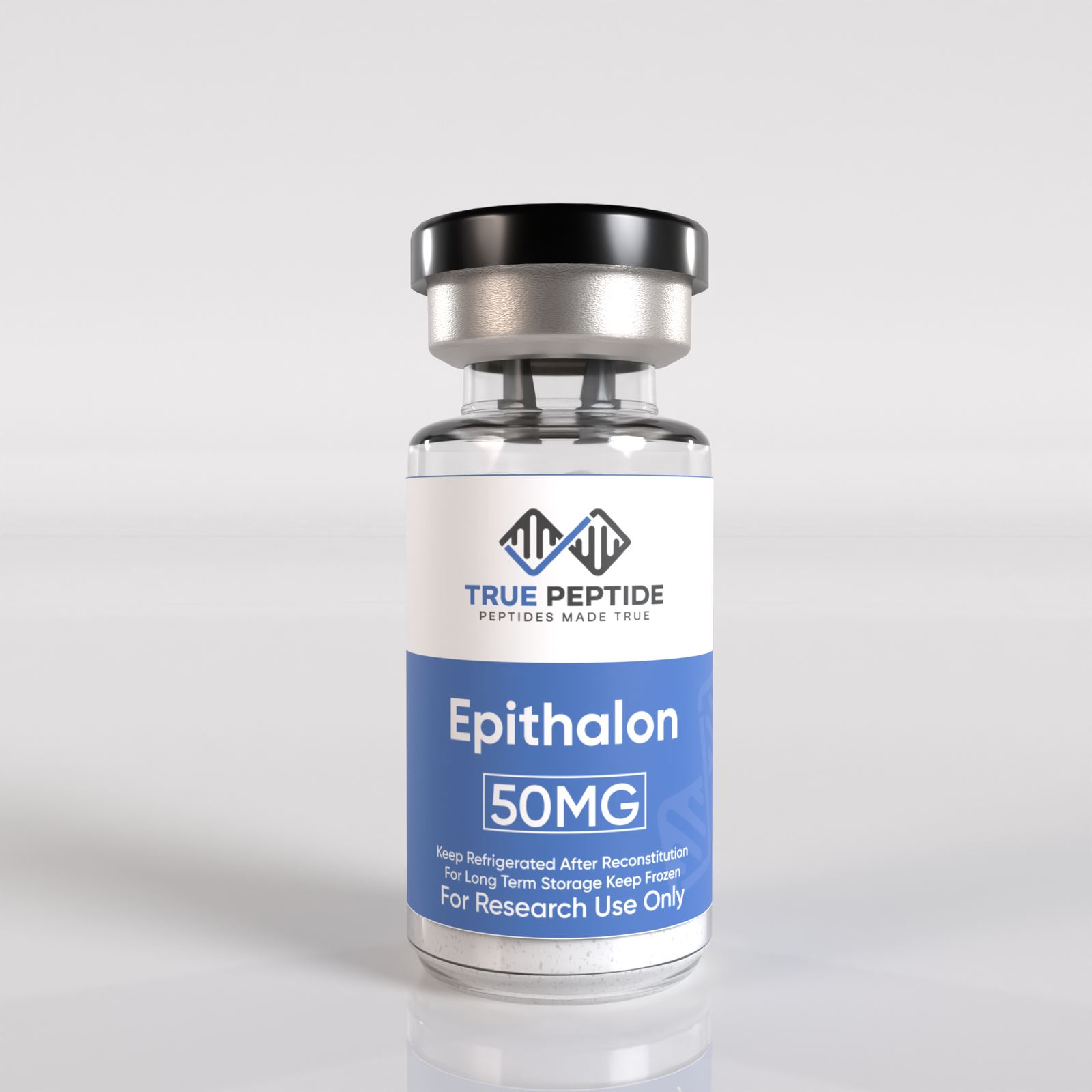
- Epithalon (10 mg, 50 mg) — Ala-Glu-Asp-Gly tetrapeptide bioregulator characterized by the Khavinson laboratory at the St. Petersburg Institute of Bioregulation and Gerontology, studied for telomerase transcription and pineal-axis endpoints
- FOXO4-DRI — D-retro-inverso peptide designed to disrupt the FOXO4–p53 interaction in senescent cells, characterized in the de Keizer laboratory as a senolytic research tool
- NAD+ (100 mg) — Nicotinamide adenine dinucleotide (oxidized form), the mitochondrial redox cofactor studied in the sirtuin, PARP, and CD38 aging literature; cross-listed from the mitochondrial category
- MOTS-c (10 mg) — 16-amino-acid mitochondrial-derived peptide encoded within the 12S rRNA region of mitochondrial DNA, studied for age-related metabolic homeostasis endpoints; cross-listed from the mitochondrial category
- 5-Amino-1MQ (5 mg, 50 mg) — Small-molecule nicotinamide N-methyltransferase (NNMT) inhibitor studied for methyl-donor pool preservation and metabolic aging endpoints; cross-listed from the metabolic category
- Pinealon (10 mg) — Glu-Asp-Arg tripeptide bioregulator from the Khavinson research program, studied for cognitive and neuroprotection endpoints in aged animal models; cross-listed from the cognitive category
Each compound ships as lyophilized powder with a lot-specific certificate of analysis. Individual product pages provide the sequence, molecular weight, purity data, and primary literature citations for that specific compound.
What Are the Categories of Longevity Research Peptides?
The categories of longevity research peptides, organized by target hallmark of aging, are as follows:
- Telomere-associated tetrapeptides — including Epithalon (Ala-Glu-Asp-Gly), studied for effects on telomerase reverse transcriptase (TERT) transcription and telomere length maintenance in aged cell and animal models.
- Senolytic peptides — including FOXO4-DRI, a D-retro-inverso peptide engineered to competitively disrupt the FOXO4–p53 interaction and induce apoptosis selectively in senescent cells.
- Mitochondrial-derived peptides (MDPs) — including MOTS-c, encoded within the mitochondrial genome and studied for age-related insulin sensitivity and metabolic homeostasis endpoints.
- NAD+ pathway compounds — including the oxidized coenzyme NAD+, studied for effects on mitochondrial NAD+ pools and downstream sirtuin, PARP, and CD38 activity in aging research.
- Nicotinamide N-methyltransferase (NNMT) inhibitors — including the small molecule 5-Amino-1MQ, studied for methyl-donor pool preservation and downstream metabolic aging endpoints.
- Short peptide bioregulators — including Pinealon (Glu-Asp-Arg), tri- and tetrapeptides from the Khavinson bioregulator research program, studied for gene-expression endpoints in aged tissue.
Which Longevity Research Peptides Are Most Studied?
The longevity research peptides with the largest published footprint include Epithalon and the broader Khavinson bioregulator series, characterized across more than four decades of research at the St. Petersburg Institute of Bioregulation and Gerontology, and NAD+ and its precursors, which anchor a large and rapidly expanding body of work in the sirtuin and mitochondrial aging literature. FOXO4-DRI has established itself as the reference senolytic peptide in the aging cell-clearance literature. MOTS-c has been the subject of active investigation as a mitochondrial-derived peptide since its identification in the USC aging research program. 5-Amino-1MQ anchors the emerging NNMT inhibitor development literature. Individual product pages in this category link to the primary literature for each specific compound.
What Is the Importance of Longevity Research Peptides in Preclinical Science?
Longevity research peptides are important to preclinical science because they are the primary experimental tools for probing the hallmarks of aging in aged animal cohorts, progeroid disease models, and in vitro senescence systems. Compounds in this category enable mechanistic dissection of specific aging pathways: Epithalon for telomere biology, FOXO4-DRI for cellular senescence clearance, NAD+ for mitochondrial and sirtuin-mediated signaling, 5-Amino-1MQ for methyl-donor pool preservation, and MOTS-c for mitochondrial-nuclear signaling. The López-Otín hallmarks-of-aging framework organizes these mechanisms into an integrated model that has become the standard organizing framework in the peer-reviewed aging biology literature.
What Are the Hallmarks of Aging Studied in Longevity Peptide Research?
The hallmarks of aging studied in longevity peptide research, per the framework described by López-Otín and colleagues, are as follows:
- Genomic instability — accumulation of DNA damage in aged cells, studied through γH2AX foci quantification and DNA damage response markers.
- Telomere attrition — progressive shortening of telomeres with cell division and time, addressed by Epithalon research and quantified by telomere length assays.
- Epigenetic alterations — age-associated changes in DNA methylation and histone modifications, quantified by epigenetic clocks including the Horvath and Hannum methylation clocks.
- Loss of proteostasis — impaired protein quality control, studied through autophagy markers (LC3-II/I, p62) and proteasome activity.
- Deregulated nutrient sensing — dysfunction in the insulin/IGF-1, mTOR, AMPK, and sirtuin nutrient-sensing pathways.
- Mitochondrial dysfunction — declining mitochondrial function with age, addressed by NAD+ and MOTS-c research and quantified by oxygen consumption rate (OCR) and membrane potential assays.
- Cellular senescence — accumulation of growth-arrested senescent cells that secrete the senescence-associated secretory phenotype (SASP), addressed by FOXO4-DRI senolytic research.
- Stem cell exhaustion — decline in tissue stem cell function with age, studied through satellite cell and hematopoietic stem cell endpoints.
- Altered intercellular communication — including chronic inflammation ("inflammaging"), studied through cytokine profiling.
- Disabled macroautophagy — added in the 2023 update of the framework, studied through autophagy flux measurements.
- Chronic inflammation — persistent low-grade inflammation with aging, quantified by inflammatory cytokine panels.
- Dysbiosis — age-related shifts in the gut microbiome, studied by 16S rRNA sequencing.
What Research Protocols Are Described in the Longevity Peptide Literature?
Published preclinical protocols for longevity peptides typically describe administration schedules (chronic dosing over 4–24 weeks for aged-cohort studies, extended lifespan studies spanning 12–36 months, and shorter senescence-model studies over 2–8 weeks), routes (subcutaneous and intraperitoneal for peptide compounds, intravenous for FOXO4-DRI in senolytic research, and oral or intraperitoneal for small-molecule NNMT inhibitors), and endpoint measurements specific to each research question. Study designs include aged mouse cohort studies with frailty index scoring and healthspan endpoints, senescence induction in cultured cells followed by senolytic screening, progeroid mouse models (Ercc1, Zmpste24) for accelerated aging phenotypes, and epigenetic clock analysis on tissue samples at intervention endpoints. Researchers must consult peer-reviewed methodology sections and obtain approval from their institution's IACUC or IRB before designing any in vivo study, per NIH Office of Laboratory Animal Welfare guidance.
Are Longevity Research Peptides Studied in Combination?
Longevity research peptides are studied in combination in the published literature, in what pharmacology reviews term convergent-hallmark or multi-pathway aging research. NAD+ pathway compounds are frequently investigated alongside senolytics, given the complementary nature of restoring mitochondrial function and clearing senescent cells. Khavinson bioregulators such as Epithalon and Pinealon are studied together in aged animal cohorts for combined effects on multiple organ systems. Combination approaches targeting distinct hallmarks of aging in parallel represent an active area of investigation across academic and biotechnology research programs. All combination research described in the primary literature is conducted in laboratory settings under approved study protocols reviewed by the researcher's institution.
What Dose Ranges Appear in Published Longevity Peptide Studies?
Dose ranges in the published longevity peptide literature vary substantially by compound, model system, route of administration, and endpoint. Reported ranges span, for reference: microgram-per-kilogram subcutaneous for Epithalon in Khavinson laboratory rodent studies; low-milligram-per-kilogram intravenous for FOXO4-DRI in senolytic clearance research; 250–500 mg/kg for NAD+ precursor studies in aged mouse models per the field's methodology; 10–100 mg/kg oral for 5-Amino-1MQ in the NNMT inhibitor literature; and 0.1–5 mg/kg intraperitoneal for MOTS-c in murine metabolic aging studies. Model systems include aged murine cohorts (C57BL/6J at 18–24 months and older), progeroid strains (Ercc1 knockout, Zmpste24 knockout), senescence-accelerated mouse SAMP8, and in vitro (IMR-90 fetal lung fibroblasts as the classical senescence line, primary human dermal fibroblasts, and HUVECs). Specific compound product pages link to the primary literature where researchers can review the exact dose ranges reported for each study. This information is provided as literature reference only and does not constitute a recommendation for use.
What Endpoints Are Measured in Longevity Peptide Research?
The endpoints measured in longevity peptide research are as follows:
- Cellular senescence markers — senescence-associated β-galactosidase (SA-β-gal) staining, p16^INK4a and p21 expression, and lamin B1 loss.
- Senescence-associated secretory phenotype (SASP) — measured by multiplex cytokine assay for IL-6, IL-8, MMP-3, and CXCL10 in conditioned media and serum.
- Telomere length — quantified by qPCR-based telomere/single-copy gene ratio, terminal restriction fragment (TRF) analysis, and quantitative FISH (Q-FISH).
- Telomerase activity — assessed by the TRAP (telomere repeat amplification protocol) assay.
- NAD+ / NADH ratio — quantified by mass spectrometry and colorimetric cycling assays in tissue homogenates.
- Sirtuin activity — measured by deacetylation assays for SIRT1, SIRT3 (mitochondrial), and SIRT6.
- Autophagy markers — LC3-II/LC3-I ratio and p62/SQSTM1 accumulation, assessed by Western blot.
- Epigenetic clock age — quantified by DNA methylation array analysis using Horvath or Hannum multi-tissue clocks.
- Frailty index in aged mice — a composite scoring system across 30+ physiological and behavioral parameters.
- Grip strength and rotarod performance — functional endpoints in aged rodent healthspan studies.
- Lifespan endpoints — median and maximum lifespan quantified in longitudinal aged mouse cohort studies.
What Signaling Pathways Do Longevity Research Peptides Target?
The signaling pathways targeted by longevity research peptides in this category are as follows:
- Telomerase reverse transcriptase (TERT) transcription — targeted by Epithalon in the telomere-maintenance research literature.
- FOXO4–p53 protein-protein interaction — competitively disrupted by FOXO4-DRI to trigger apoptosis selectively in senescent cells expressing high FOXO4.
- NAD+ salvage pathway (NAMPT, NMNAT enzymes) — engaged by NAD+ and precursor compounds to restore mitochondrial NAD+ pools.
- Sirtuin family (SIRT1–SIRT7) — NAD+-dependent deacetylases regulating chromatin, mitochondrial function, and metabolic homeostasis, downstream of NAD+ pathway compounds.
- Nicotinamide N-methyltransferase (NNMT) — the enzyme targeted by 5-Amino-1MQ, whose inhibition preserves the S-adenosylmethionine (SAM) methyl-donor pool.
- mTOR / S6K1 nutrient sensing — a central longevity-modulating pathway, studied for indirect modulation by compounds in this category.
- AMPK energy sensing — a longevity-associated pathway activated by mitochondrial signals and studied downstream of NAD+ and MDP compounds.
- Mitochondrial-nuclear signaling — engaged by MOTS-c as a mitochondrial-encoded peptide that translocates to the nucleus to modulate stress-response gene expression.
What Model Systems Are Used in Longevity Peptide Research?
The model systems used in longevity peptide research are as follows:
- Aged murine cohorts — C57BL/6J and other strains aged 18–24+ months for age-associated phenotype studies.
- Progeroid mouse models — Ercc1 knockout, Zmpste24 knockout, and other genetically accelerated aging strains.
- Senescence-accelerated mouse (SAMP8, SAMP10) — for accelerated cognitive and organ-system aging phenotypes.
- IMR-90 fetal lung fibroblasts — the classical human diploid cell line used for in vitro replicative and stress-induced senescence.
- Primary human dermal fibroblasts — used for senescence induction via etoposide, doxorubicin, or ionizing radiation followed by senolytic screening.
- Hutchinson-Gilford progeria syndrome patient fibroblasts — an accelerated human aging cell model.
- Naked mole rat cells and tissues — a comparative longevity model with exceptional lifespan for its size.
- C. elegans and D. melanogaster — invertebrate lifespan models for high-throughput longevity screening.
What Adverse Events Have Been Reported in the Longevity Peptide Research Literature?
The adverse events reported in the published preclinical literature for longevity research peptides include injection-site observations (erythema, transient inflammation) for parenteral compounds, and, for compounds administered chronically in aged cohorts, cumulative dose-related observations documented in the study record. FOXO4-DRI, as a senolytic compound, has documented off-target effects at higher doses in the published preclinical record. Some studies have found variable event rates that may be partly due to differences in dosing schedule, cohort age, and species across trials. Researchers must review the full published safety data for any specific compound before designing a study.
In What Form Do Longevity Research Peptides Ship?
Longevity research peptides from True Peptide Labs ship as lyophilized (freeze-dried) peptide powder in sealed sterile vials, packaged with a lot-specific certificate of analysis (COA) documenting purity by HPLC and mass by MS. Unopened vials are typically stored refrigerated at 2–8°C per the storage instructions on the COA, and reconstituted material is stored per the published stability data for the specific compound. Cold-pack shipping options are available for temperature-sensitive compounds. All orders ship from the True Peptide Labs facility in Palm Beach Gardens, Florida.
How Are Longevity Research Peptides Tested for Purity?
Longevity research peptides at True Peptide Labs are tested every lot by third-party ISO-accredited analytical laboratories using high-performance liquid chromatography (HPLC) for purity determination and mass spectrometry (MS) for molecular weight confirmation. Certificates of analysis are lot-specific and are available on each product page or by request. Testing methodology follows the analytical standards described in the United States Pharmacopeia (USP) general chapter <1503> for peptide characterization.
How to Purchase Longevity Research Peptides Online
Longevity research peptides can be purchased directly through the True Peptide Labs catalog on this page. Products are sold exclusively for research use by qualified researchers, laboratories, and institutions, and are not available for human use. All orders ship from the Palm Beach Gardens, Florida facility with standard shipping and cold-pack options for temperature-sensitive compounds. By purchasing, buyers affirm the material will not be administered to humans or animals outside of an approved research protocol reviewed by their institution's IACUC or IRB.
What Is the Difference Between Longevity and Mitochondrial Research Peptides?
Longevity research peptides target the broader hallmarks of aging framework — including telomere biology, cellular senescence, epigenetic drift, and multi-organ aging phenotypes — while mitochondrial research peptides target the mitochondrion specifically as an organelle, including the inner mitochondrial membrane, the electron transport chain, and mitochondrial-encoded signaling. The two categories overlap significantly for compounds such as MOTS-c and NAD+, which are studied under both frameworks. The dedicated mitochondrial research peptides category page covers SS-31, MOTS-c, NAD+, and Glutathione under their primary mitochondrial framework, and the cognitive research peptides category page covers Pinealon and the broader Khavinson bioregulator series under their primary attention-and-memory framework.