

Product categories
- Apparel
- Cognitive Research Peptides
- Dermal Research Peptides
- Follicular Research Peptides
- Immunomodulatory Research Peptides
- Longevity Research Peptides
- Melanocortin Research Peptides
- Metabolic Research Peptides
- Mitochondrial Research Peptides
- Myogenic Research Peptides
- Neurobehavioral Research Peptides
- Neuroendocrine Research Peptides
- Peptide Research Supplies
- Regenerative Research Peptides
- Shop
- Somatotropic Research Peptides
Filter by price


MOTS-C 10mg


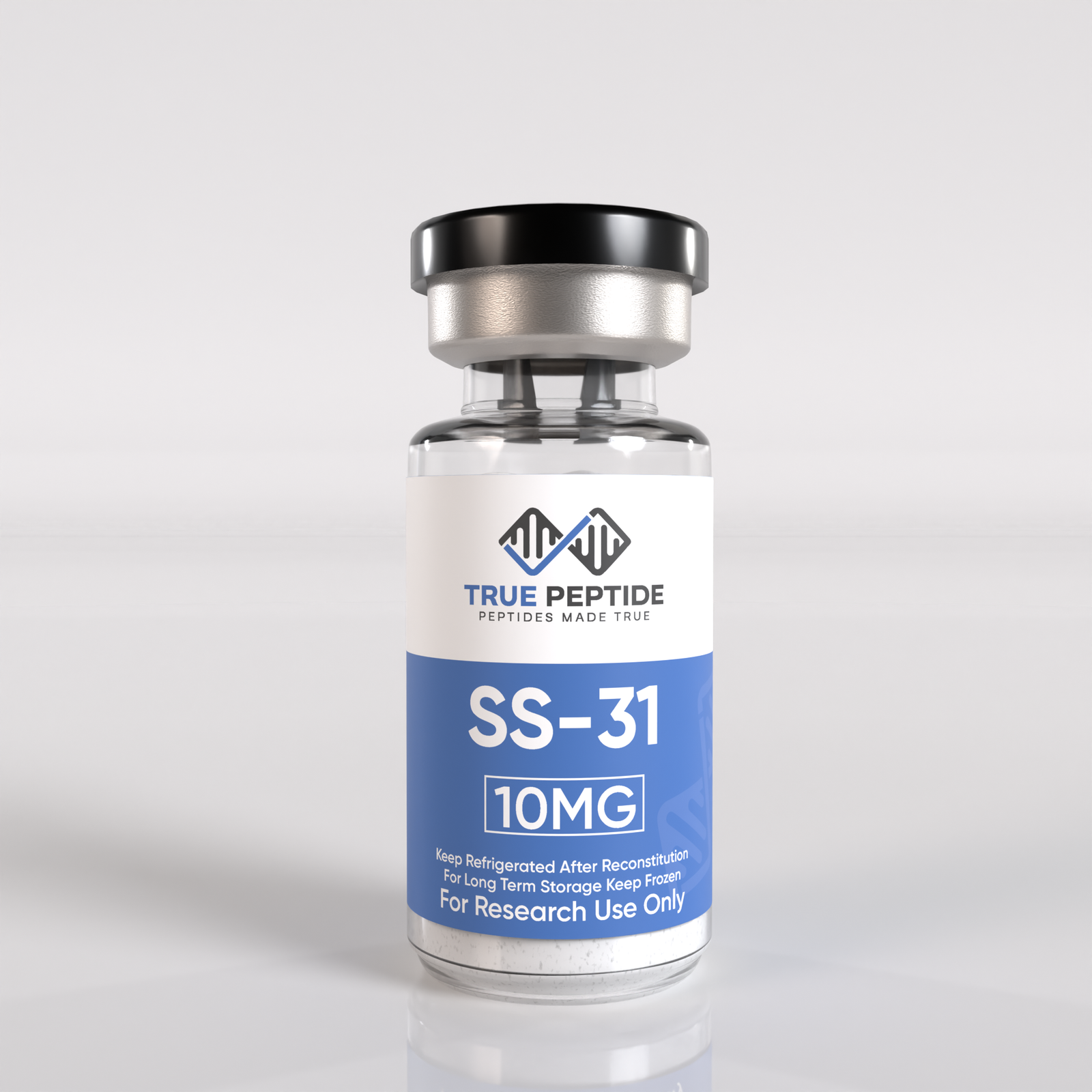
SS-31
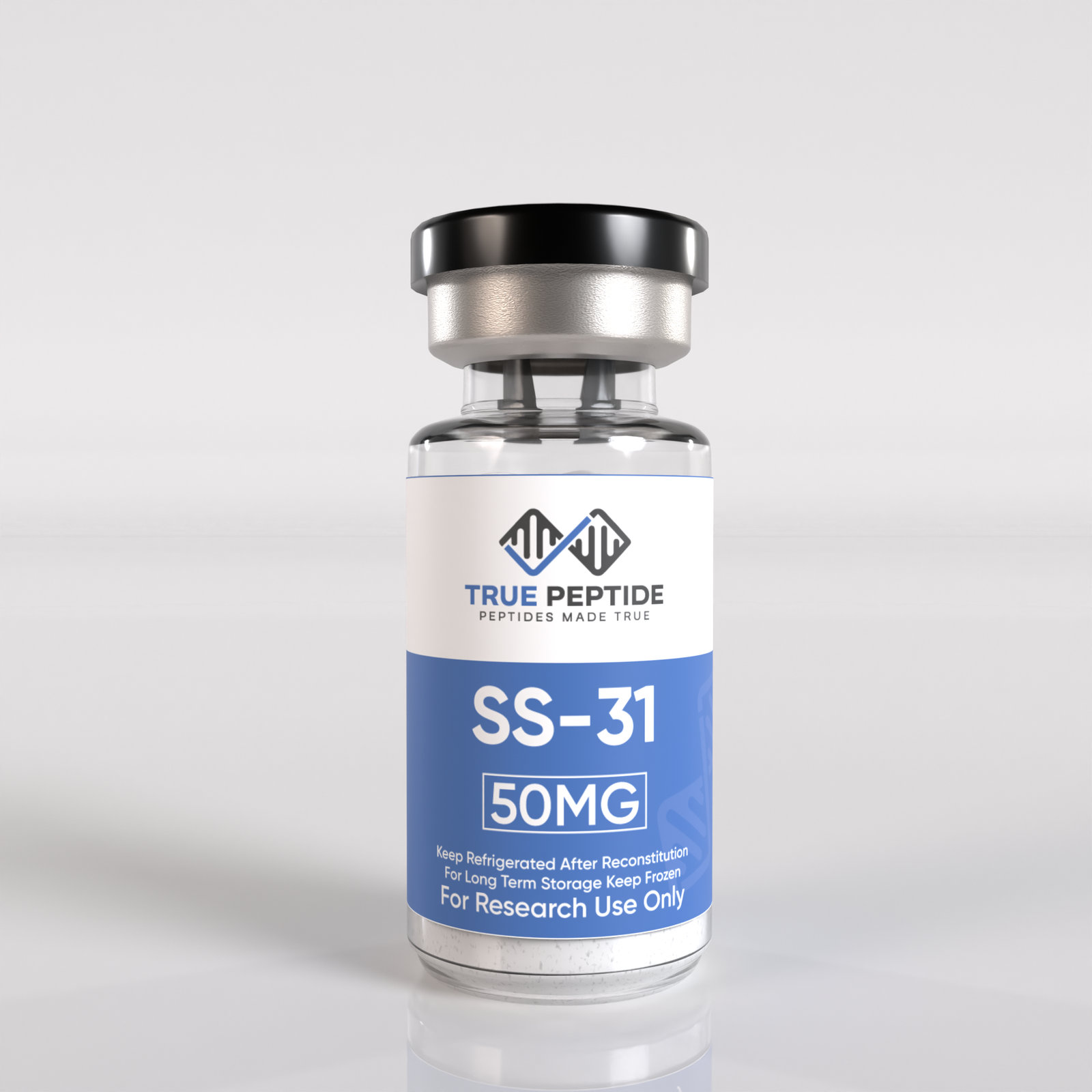
Mitochondrial research peptides are synthetic peptide and small-molecule compounds studied in preclinical laboratory research for activity at mitochondrial targets, including the inner mitochondrial membrane, the electron transport chain, and mitochondrial-derived signaling pathways. This True Peptide Labs category includes cardiolipin-binding peptides, mitochondrial-derived peptide (MDP) analogs, redox cofactors, and antioxidant compounds studied for their role in mitochondrial bioenergetics and oxidative stress endpoints.
Every compound ships as lyophilized powder in a sealed sterile vial with a lot-specific certificate of analysis confirming ≥98% purity by HPLC and mass confirmation by MS, tested at ISO-accredited analytical laboratories. All products are sold strictly for research use only (RUO) by qualified researchers, laboratories, and institutions, and are not intended for human or veterinary use, diagnosis, or treatment of any disease per 21 CFR 312.2(b).
Table of Contents
- What Are Mitochondrial Research Peptides?
- Which Compounds Are Available in the True Peptide Labs Mitochondrial Category?
- What Are the Categories of Mitochondrial Research Peptides?
- Which Mitochondrial Research Peptides Are Most Studied?
- What Is the Importance of Mitochondrial Research Peptides in Preclinical Science?
- What Research Protocols Are Described in the Mitochondrial Peptide Literature?
- Are Mitochondrial Research Peptides Studied in Combination?
- What Dose Ranges Appear in Published Mitochondrial Peptide Studies?
- What Endpoints Are Measured in Mitochondrial Peptide Research?
- What Adverse Events Have Been Reported in the Mitochondrial Peptide Research Literature?
- In What Form Do Mitochondrial Research Peptides Ship?
- How Are Mitochondrial Research Peptides Tested for Purity?
- How to Purchase Mitochondrial Research Peptides Online
- What Is the Difference Between Mitochondrial and Longevity Research Peptides?
What Are Mitochondrial Research Peptides?
Mitochondrial research peptides are synthetic peptide and small-molecule compounds used in laboratory studies to investigate mitochondrial function, bioenergetics, and oxidative stress in animal models and in vitro systems. These compounds act at targets including cardiolipin on the inner mitochondrial membrane, mitochondrial-derived peptide (MDP) receptor systems, the mitochondrial electron transport chain, and the cellular NAD+ salvage pathway. The class is defined by target localization to the mitochondrion and mechanism of action on mitochondrial homeostasis, per the framework described in Szeto (2014) in the British Journal of Pharmacology and subsequent reviews in Cell Metabolism.
Which Compounds Are Available in the True Peptide Labs Mitochondrial Category?
The compounds available in the True Peptide Labs mitochondrial research category, organized by mechanism, are listed below. Each compound links to its dedicated product page with certificate of analysis, primary literature references, and lot-specific purity data.
- SS-31 (10 mg, 50 mg) — Szeto-Schiller tetrapeptide, cardiolipin-binding compound studied for inner mitochondrial membrane research
- MOTS-c (10 mg) — 16-amino-acid mitochondrial-derived peptide encoded within the 12S rRNA region of mitochondrial DNA
- NAD+ (100 mg) — Nicotinamide adenine dinucleotide (oxidized form), redox cofactor studied in mitochondrial bioenergetics and sirtuin research
- Glutathione (1500 mg) — GSH tripeptide (γ-glutamyl-cysteinyl-glycine), endogenous antioxidant studied for reactive oxygen species (ROS) research
- AOD-9604 (5 mg) — Synthetic hGH fragment (176-191), cross-listed from the metabolic category for lipolysis and mitochondrial fatty acid oxidation endpoints
- SLU-PP-332 (5 mg) — Estrogen-related receptor (ERR) pan-agonist, cross-listed from the metabolic category for mitochondrial biogenesis endpoints
Each compound ships as lyophilized powder with a lot-specific certificate of analysis. Individual product pages provide the sequence, molecular weight, purity data, and primary literature citations for that specific compound.
What Are the Categories of Mitochondrial Research Peptides?
The categories of mitochondrial research peptides, organized by target and mechanism, are as follows:
- Cardiolipin-binding peptides — Szeto-Schiller (SS) tetrapeptides that localize to the inner mitochondrial membrane and are studied for effects on cristae structure and electron transport chain organization.
- Mitochondrial-derived peptides (MDPs) — short peptides encoded within the mitochondrial genome, including MOTS-c and humanin-family analogs, studied for insulin sensitivity and metabolic homeostasis endpoints.
- NAD+ pathway compounds — the oxidized coenzyme NAD+ and its precursors, studied in the sirtuin, PARP, and CD38 literature for effects on mitochondrial NAD+ pools.
- Endogenous antioxidants — including reduced glutathione (GSH), studied for effects on mitochondrial reactive oxygen species and redox signaling.
- Mitochondrial biogenesis modulators — small molecules including ERR agonists, studied for effects on PGC-1α signaling and mitochondrial mass.
- Fatty acid oxidation compounds — including AOD-9604 and related lipolytic fragments studied for mitochondrial β-oxidation endpoints.
Which Mitochondrial Research Peptides Are Most Studied?
The mitochondrial research peptides with the highest publication volume in PubMed and the largest clinical trial registry footprint in ClinicalTrials.gov include SS-31, MOTS-c, NAD+, and glutathione. SS-31 alone appears in more than 400 indexed publications since its characterization in the Szeto laboratory at Weill Cornell Medical College. MOTS-c has been the subject of active investigation since its identification by Lee and colleagues in the 2015 Cell Metabolism report from the University of Southern California Leonard Davis School of Gerontology. Individual product pages in this category link to the primary literature for each specific compound.
What Is the Importance of Mitochondrial Research Peptides in Preclinical Science?
Mitochondrial research peptides are important to preclinical science because they are the primary experimental tools for probing mitochondrial dysfunction, bioenergetic decline, and oxidative stress in aging, cardiometabolic, and neurodegenerative disease models. The 2018 review by Rajman, Chwalek, and Sinclair in Cell Metabolism, published from Harvard Medical School, identified NAD+ pathway modulation as a target in more than 30 active preclinical intervention studies of age-related decline. Compounds in this category inform mechanism-of-action understanding for the mitochondrial free radical theory, the mitohormesis model, and the mitochondrial-derived peptide signaling hypothesis in the peer-reviewed literature.
What Research Protocols Are Described in the Mitochondrial Peptide Literature?
Published preclinical protocols for mitochondrial peptides typically describe administration schedules (single-dose pharmacokinetic runs, chronic dosing over 7–28 days), vehicle preparation (bacteriostatic water or sterile saline reconstitution), and endpoint measurements specific to each compound (Seahorse XF respirometry for oxygen consumption rate, mitochondrial membrane potential by TMRM staining, cardiolipin content by mass spectrometry, and tissue ATP quantification). Study designs vary by research question — pharmacokinetic studies, isolated mitochondria assays, and whole-animal metabolic phenotyping each require distinct protocols. Researchers must consult peer-reviewed methodology sections and obtain approval from their institution's IACUC or IRB before designing any in vivo study, per NIH Office of Laboratory Animal Welfare guidance.
Are Mitochondrial Research Peptides Studied in Combination?
Mitochondrial research peptides are studied in combination in the published literature, in what pharmacology reviews term co-administration or convergent-pathway research. Cardiolipin-binding peptides are frequently investigated alongside NAD+ pathway compounds — for example, published preclinical studies have examined SS-31 co-administration with NAD+ precursors for combined effects on membrane potential and sirtuin-mediated deacetylation. All combination research described in the primary literature is conducted in laboratory settings under approved study protocols.
What Dose Ranges Appear in Published Mitochondrial Peptide Studies?
Dose ranges in the published mitochondrial peptide literature vary substantially by compound, model system, route of administration, and endpoint. Reported ranges span, for reference: 1–5 mg/kg subcutaneous for SS-31 in rodent ischemia-reperfusion models per the Szeto laboratory publications; 0.1–5 mg/kg intraperitoneal for MOTS-c in murine metabolic studies per the Lee et al. (2015) methodology; and 250–500 mg/kg for NAD+ precursor studies in aged mouse models per the Sinclair laboratory reports. Model systems include murine (C57BL/6J, aged cohorts, and disease-model variants), non-human primate, isolated mitochondria preparations, and in vitro (HEK293, HeLa, and primary cardiomyocyte cultures). Specific compound product pages link to the primary literature where researchers can review the exact dose ranges reported for each study. This information is provided as literature reference only and does not constitute a recommendation for use.
What Endpoints Are Measured in Mitochondrial Peptide Research?
The endpoints measured in mitochondrial peptide research are as follows:
- Oxygen consumption rate (OCR) — quantified by Seahorse XF extracellular flux analysis, reported in pmol O₂/min/cell or per mg protein.
- Mitochondrial membrane potential (Δψm) — measured by TMRM, JC-1, or Rhodamine-123 fluorescence imaging.
- ATP production — assayed by luciferase-based bioluminescence in cell lysates or tissue homogenates.
- Reactive oxygen species (ROS) — quantified by MitoSOX, DCFDA, or Amplex Red fluorescence.
- Cardiolipin content and composition — measured by liquid chromatography-mass spectrometry (LC-MS).
- Mitochondrial DNA copy number — quantified by qPCR against nuclear reference genes.
- Electron transport chain complex activity — assayed spectrophotometrically for Complexes I through IV.
What Adverse Events Have Been Reported in the Mitochondrial Peptide Research Literature?
The adverse events reported in the published preclinical and clinical trial literature for mitochondrial research peptides include injection-site observations (erythema, transient inflammation) for peptide compounds, gastrointestinal effects at higher doses in animal models, and, for compounds that have advanced to human clinical research such as SS-31, dose-dependent effects documented in the trial safety data. Some studies have found variable event rates that may be partly due to differences in formulation, route, and titration schedule across trials. Researchers must review the full published safety data for any specific compound before designing a study.
In What Form Do Mitochondrial Research Peptides Ship?
Mitochondrial research peptides from True Peptide Labs ship as lyophilized (freeze-dried) powder in sealed sterile vials, packaged with a lot-specific certificate of analysis (COA) documenting purity by HPLC and mass by MS. Unopened vials are typically stored refrigerated at 2–8°C per the storage instructions on the COA, and reconstituted material is stored per the published stability data for the specific compound. Cold-pack shipping options are available for temperature-sensitive compounds. All orders ship from the True Peptide Labs facility in Palm Beach Gardens, Florida.
How Are Mitochondrial Research Peptides Tested for Purity?
Mitochondrial research peptides at True Peptide Labs are tested every lot by third-party ISO-accredited analytical laboratories using high-performance liquid chromatography (HPLC) for purity determination and mass spectrometry (MS) for molecular weight confirmation. Certificates of analysis are lot-specific and are available on each product page or by request. Testing methodology follows the analytical standards described in the United States Pharmacopeia (USP) general chapter <1503> for peptide characterization.
How to Purchase Mitochondrial Research Peptides Online
Mitochondrial research peptides can be purchased directly through the True Peptide Labs catalog on this page. Products are sold exclusively for research use by qualified researchers, laboratories, and institutions, and are not available for human use. All orders ship from the Palm Beach Gardens, Florida facility with standard shipping and cold-pack options for temperature-sensitive compounds. By purchasing, buyers affirm the material will not be administered to humans or animals outside of an approved research protocol reviewed by their institution's IACUC or IRB.
What Is the Difference Between Mitochondrial and Longevity Research Peptides?
Mitochondrial research peptides target the mitochondrion directly — the inner membrane, the electron transport chain, mitochondrial DNA-encoded signaling, and mitochondrial redox homeostasis — while longevity research peptides target broader aging pathways including telomere biology, senolytic clearance, and pineal-axis regulation. The two categories overlap for compounds such as MOTS-c and NAD+, which are studied under both frameworks: as mitochondrial mediators and as candidate interventions in age-related decline research. The dedicated longevity research peptides category page covers Epithalon, FOXO4-DRI, and related non-mitochondrial senescence compounds in full.